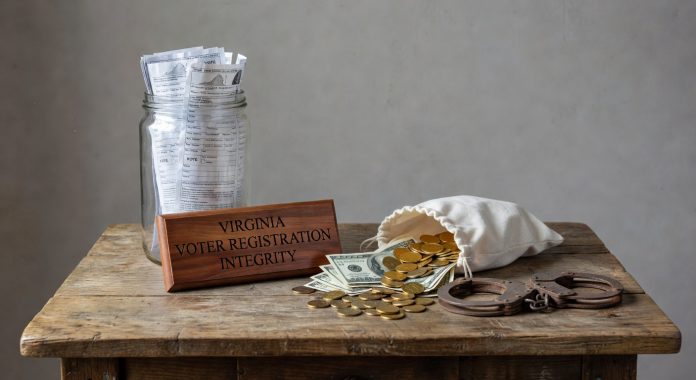
In Richmond, the Virginia General Assembly has taken a decisive step to protect the integrity of elections by passing House Bill 113, which targets bribery in the voter registration process. This new law amends Section 24.2-1007 of the Code of Virginia and establishes clear prohibitions against soliciting or accepting bribes to influence decisions about registering to vote. Signed into law by the governor on April 13, 2026, as Chapter 909 of the Acts of Assembly, the legislation will go into effect on July 1, 2026.
The provisions specify that no person shall solicit or accept, directly or indirectly, any money or any thing of value to influence his or another’s decision to register to vote. Additionally, the bill outlines certain exceptions to the prohibitions on soliciting or accepting bribes to influence a person to vote or to register to vote. These measures extend existing election offense laws to cover the registration phase, providing a stronger deterrent against corrupt practices that could compromise the voter registration system.
The bill was prefiled on January 2, 2026, and ordered printed, with formal introduction occurring on January 14. It was immediately referred to the House Committee on Privileges and Elections and assigned to the Voting Rights subcommittee. The subcommittee recommended reporting the bill unanimously on January 28 with an 8-0 vote. On January 30, the full committee reported the bill with amendments by a unanimous 22-0 vote, accompanied by a fiscal impact statement from the Department of Planning and Budget.
Following its first reading on January 30, the House read the bill a second time on February 2 and agreed to the committee amendments. The bill was engrossed, and it was moved to the regular calendar from the uncontested one. On February 3, the House passed the legislation with a strong 95-3 vote.
In the Senate, the bill received its constitutional reading on February 4 and was referred to the Senate Committee on Privileges and Elections. The Senate committee offered and reported a substitute on February 24 by a 9-6 vote. The substitute was printed as 26107632D-S1. On February 26, the Senate suspended rules and dispensed with constitutional reading for the second reading, passing it by a 40-0 block vote. The bill was passed by for the day on February 26 and February 27. On March 2, the Senate agreed to the substitute, engrossed it, and passed the bill by a 22-17 vote. The House then agreed to the Senate substitute on March 4 with a 91-5 vote.
The bill was enrolled on March 11, and the full text as passed by both houses was prepared. It was signed by the Senate President on March 11 and the House Speaker on March 12. The enrolled bill was sent to the governor on March 14. On April 13, the governor approved the bill, enacting it as Chapter 909 with an effective date of July 1, 2026.
This comprehensive legislative process highlights the careful consideration given to the issue of election integrity. By prohibiting the use of money or valuables to sway voter registration decisions, the law addresses a potential avenue for undue influence that could affect the composition of voter rolls. The inclusion of exceptions ensures that the statute balances enforcement with the allowance for legitimate civic and political engagement.
With overwhelming support in the House of Delegates and passage through the Senate, this law underscores the priority placed on maintaining clean and honest election practices in Virginia. Election administrators will benefit from the updated language in the Code of Virginia, which clarifies the scope of prohibited conduct regarding bribes for registration. Prosecutors will have enhanced authority to pursue violations, contributing to a more robust system for upholding electoral standards.
The enactment of House Bill 113 comes at a time when ensuring the accuracy of voter registration is paramount for the conduct of fair elections. This legislation provides an important tool for preventing any attempts to buy influence over who registers to vote, thereby protecting the voluntary nature of the process. The exceptions incorporated into the bill prevent overreach while targeting the specific corrupt behavior.
As the state moves forward with this new law, it sets a precedent for vigilance against bribery in all aspects of the electoral system. Virginia’s commitment to this cause is evident in the detailed review, amendments, and broad consensus achieved during the 2026 session. The result is a strengthened framework that will help preserve public confidence in the registration and voting processes for years to come.