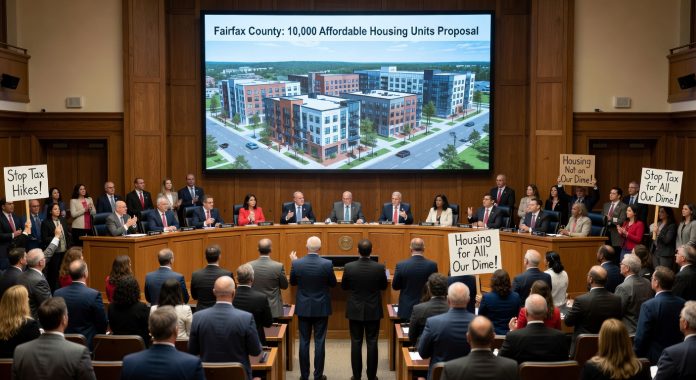
The plan, first adopted with an initial infusion of over $73 million from the county’s fiscal year 2023 budget, relies on public funds to subsidize construction and preservation efforts. Projects like the Residences at Government Center II, featuring solar panels, parks, and childcare centers on county-owned land, exemplify how public resources are being redirected to meet this mandate. While county officials tout progress, claiming to be on track, critics highlight a stark reality: for every affordable unit added, an equivalent number of market-rate units have been lost, resulting in net zero growth in overall housing stock.
This revelation underscores the inefficiency of government-driven housing policies. Fairfax County has poured resources into subsidized developments while market-rate housing— the kind that generates sustainable tax revenue and supports economic vitality— has evaporated. Renovations and redevelopments are now being counted toward the goal to inflate progress figures, masking the lack of true expansion. Taxpayers foot the bill not just for construction but for ongoing maintenance, utilities, and services strained by increased density without corresponding infrastructure upgrades.
Roads, schools, and public safety services in Fairfax County, one of Virginia’s most populous jurisdictions, are already overburdened. The push for 10,000 units exacerbates these pressures, diverting funds from essential priorities like police training facilities and road repairs— even as the county sells land for data centers to fund some public safety needs. Specific developments, such as those in Franconia and Government Center parking lots, have sparked public backlash over traffic congestion, school overcrowding, and neighborhood character changes, yet the Democrat-dominated board presses on.
From a fiscal conservative standpoint, this approach exemplifies big government overreach. Instead of mandating affordable housing through subsidies and zoning overrides, leaders should prioritize deregulation to unleash private market forces. Reducing barriers to development, cutting property taxes, and addressing root causes like overregulation would naturally increase supply and lower costs for all residents. Subsidized housing often leads to higher long-term costs, dependency on government programs, and displacement of working families who can’t compete with below-market rents.
Chairman McKay and his allies argue the housing crisis demands bold action, but bold does not mean burdensome. With job growth outpacing housing supply, as noted in recent county assessments calling for tens of thousands more homes by 2035, the solution lies in free enterprise, not forced philanthropy via taxation. Residents deserve policies that protect their wallets and promote self-reliance, not endless spending sprees dressed as compassion.
The board’s insistence on this path, despite evidence of minimal net benefit, raises questions about accountability. Sole Republican Pat Herrity has voiced opposition to similar overreaches, but with a 9-1 Democrat majority, fiscal restraint remains elusive. As Fairfax taxpayers brace for continued budget markups and potential tax hikes in FY2027, the true cost of this housing gamble becomes clearer: eroded property values, strained services, and a county prioritizing progressive ideals over practical governance.
Source: Field reports and eyewitness accounts.