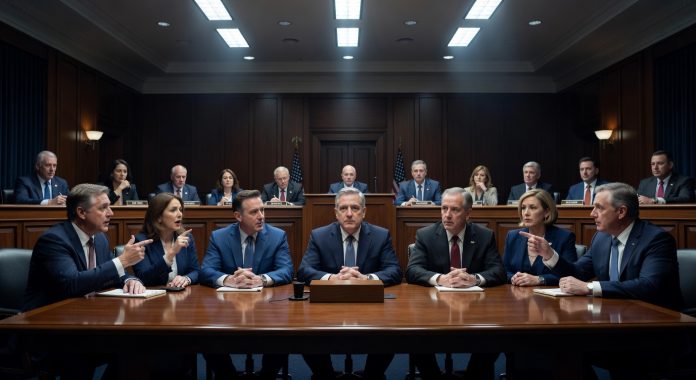
The hearing focused on key components of the FY27 budget request, particularly those involving defense priorities and allied commitments. A seasoned Republican congressman, speaking bluntly from the dais, questioned whether any U.S. allies had formally signed up for shared initiatives outlined in the budget proposal. ‘Do we have any of our allies that have signed up for it?’ he pressed, emphasizing the lack of visible commitments in the open forum. The room fell quiet as no immediate affirmations came forward, illustrating the limitations of public sessions where sensitive diplomatic exchanges cannot unfold freely.
Vindman, positioned among the committee members, offered no follow-up inquiry or insight into potential ally responses. Instead, the dialogue shifted to tentative hopes for future progress. ‘Maybe we can in the next session,’ one voice suggested, with the Republican lawmaker responding affirmatively, ‘Well, I look forward to.’ This exchange laid bare a fundamental reality of congressional oversight: open hearings serve public transparency but fall short on delivering the depth required for strategic decision-making.
The Republican continued, driving home the point with stark clarity: ‘I’m learning a lot more in the closed committee holds because I’m not learning [in the open sessions].’ This candid admission resonated as a critique of the format itself, but it also spotlighted the need for members like Vindman to demonstrate proactive engagement. Attendees in open sessions risk missing vital context without pressing the right questions or leveraging classified briefings, a skill honed by years of experience on Capitol Hill.
This episode comes amid heightened scrutiny of the FY27 budget process, where Republicans have advocated for fiscal discipline and robust national security funding. With global threats from adversaries like China and Russia looming large, ensuring allied burden-sharing remains paramount. The absence of firm ally pledges in open testimony raises questions about the administration’s diplomatic efforts and the readiness of congressional Democrats to hold agencies accountable.
Vindman’s tenure in Congress has been marked by his background as a retired Army officer and attorney, yet critics argue his relative newcomer status shows in high-stakes settings like this. Virginia’s Seventh District, encompassing parts of Prince William, Stafford, and Spotsylvania counties, deserves representation that aggressively pursues answers on defense spending that impacts military families and national defense installations in the region. Republicans on the committee exemplified the rigorous oversight expected, pushing for accountability on taxpayer dollars and international partnerships.
The contrast was evident throughout the hearing. While Republicans probed the status of ally involvement and anticipated deeper dives in classified settings, Vindman remained passive. This passivity echoes broader concerns about Democratic approaches to foreign policy, often criticized for lacking the assertiveness needed to secure commitments from NATO partners and Indo-Pacific allies. In an era of strained budgets and escalating tensions, such hearings demand members who know precisely what to ask to safeguard American interests.
Further context from the proceedings revealed ongoing deliberations across multiple subcommittee holds for FY27. These sessions, part of the broader appropriations marathon, scrutinize billions in proposed expenditures. Republicans have consistently called for trimming waste while bolstering core defense capabilities, positions that align with voter priorities in districts like VA-07, home to Quantico Marine Base and numerous defense contractors.
Vindman’s silence stands in stark relief against the proactive stance of his Republican colleagues. As the budget blueprint takes shape, constituents may question whether their congressman is equipped to navigate the nuances of closed-door intelligence that informs open testimony. Effective representation requires not just attendance, but the acumen to extract critical details that protect Virginia families and the nation.
The FY27 cycle underscores the enduring value of Republican leadership in appropriations, where experience translates to stronger outcomes for defense and diplomacy. As these hearings progress, all eyes remain on whether Vindman steps up or continues to defer to the closed sessions he may not fully access.
Source: Field reports and eyewitness accounts.