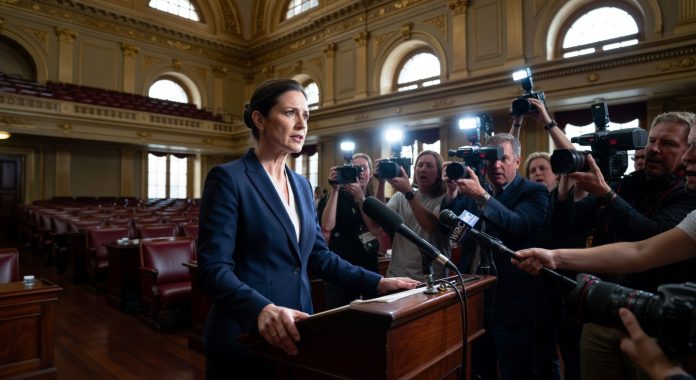
During her successful 2025 gubernatorial campaign, Spanberger assured voters that as a potential governor nominee, she had no intention of pursuing a redraw of Virginia’s congressional maps. Press conference footage captured her clear statement: Virginia governor nominees do not plan to redraw congressional maps if elected. This promise resonated with Virginians weary of partisan gerrymandering, especially after the 2020 constitutional amendment that established a bipartisan redistricting commission, approved by 66 percent of voters to strip politicians of unchecked map-drawing power.
Yet, mere weeks into her term in January 2026, Spanberger’s administration backed a radical shift. The Democrat-controlled General Assembly, comprising the House of Delegates and the Senate of Virginia, advanced a constitutional amendment in 2025 to place a mid-decade redistricting referendum on the April 21, 2026, ballot. This measure sought to suspend the bipartisan commission process, empowering the legislature to redraw maps for the 2026-2030 cycle before reverting post-2030 census.
Spanberger not only failed to veto this proposal but actively signed the resolution sending it to voters and launched a high-profile campaign urging a YES vote. In videos and statements, she framed the referendum as a ‘temporary, targeted response’ to actions in other states, claiming it countered President Trump’s alleged demands for more Republican seats. ‘This all began because President Trump said he was entitled to more congressional seats,’ she insisted in interviews, positioning Virginia’s move as defensive.
Conservative critics, however, see through the rhetoric. The proposed maps, leaked and analyzed, would dramatically shift Virginia’s current 6 Democrat-5 Republican congressional delegation to a lopsided 10 Democrat-1 Republican advantage. Rural Republican voters, representing nearly half the electorate, would be packed into a single safe GOP district, diluting their influence statewide. ‘This isn’t fairness; it’s disenfranchisement,’ charged opponents, noting every Virginia county except Fairfax voted NO on the referendum.
The Democratic machine poured unprecedented resources into the fight, spending tens of millions—more than on Spanberger’s own gubernatorial race. House Minority Leader Hakeem Jeffries personally funneled $20 million from his campaign funds. Even the Washington Post decried the ballot language as ‘brazenly dishonest,’ effectively endorsing NO. Despite this, early results showed a razor-thin YES victory at 51.45 percent to 48.55 percent with 97 percent counted, though legal challenges swiftly followed.
On April 24, a Virginia judge blocked certification of the results, citing procedural irregularities and questions over the amendment’s override of the 2020 citizen-approved process. Spanberger dismissed opposition as ‘millions of dollars spent misrepresenting my position,’ claiming voters ‘saw through it anyway.’ But footage of her signing the referendum bill shows a grinning governor surrounded by laughing Democrats, fueling accusations of callous elitism.
This saga underscores Spanberger’s pattern of moderation in rhetoric masking aggressive partisanship in action. Once a critic of gerrymandering as ‘detrimental to our democracy,’ she now leads the charge to entrench Democratic dominance, sidelining rural voices and suburban independents. With courts poised to intervene and 2027 legislative races looming, Virginians demand accountability. The flip-flop not only erodes trust but threatens the balanced governance that propelled Virginia’s economic rise under divided control.
As one analyst noted, ‘This is how republics erode—not with fanfare, but with smiling politicians rewriting rules mid-game.’ Spanberger’s betrayal leaves Republicans energized for payback, vowing to reclaim fair maps and representation.
Source: Field reports and eyewitness accounts.