By Steve Haner,
The Jefferson Forum’s June commentary outlines the energy challenges that Virginia faces in advance of the 2025 elections. Virginia is still lagging behind in the work of the 2026 Energy Legislation, despite the fact that the General Assembly and Abigail Spanberger have completed the legislation.
Ignore any political rhetoric coming from Capitol Hill, Richmond. Electricity costs will continue to rise and the reliability risk is still there.
Jefferson Forum, which spent more time in the Assembly during this winter, would like to be able to say that their efforts have made a difference. Being closer to the process in this year’s election only highlighted that elected officials were working without a good understanding of the issues. Most bills do not include financial analysis and ratepayer impact data. And the various donor organizations, such as the utilities, are more heard than the average consumer.
A year ago, the main issue was the growing disconnect between Virginia’s internal electricity supply and demand. The projected demand for Virginia’s data centers is so high that it even makes Virginia’s multistate PJM interconnection, to which Virginia belongs, questionable in the coming years.
The General Assembly did not pass any legislation that would solve the supply crisis. A second bitter winter like that of early this year or a summer heat wave requiring an equivalent energy surge could lead to the involuntary demand for power reduction or shut-off.
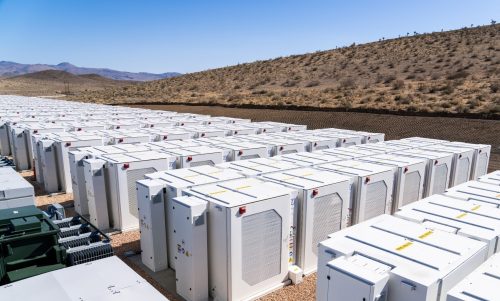
There are several bills that encourage private investment in solar energy for homes or small businesses. However, their utility in an emergency, especially during a storm, is very limited. Batteries are not generating any energy and their lifespan is limited. Batteries do not generate energy and actually lose it every time they cycle.
The Governor and General Assembly focused their attention on the electricity cost, not only the overall issue, but also the perception that the costs are high because of the special treatment given to data centers. Even if our leaders were serious about their concerns, it’s clear that they didn’t do anything on either front.
Several pieces of legislation that are soon to be implemented will actually increase residential bills over time. Carbon tax, behind Regional Greenhouse Gas Initiatives (RGGI), will lead the charge. Futures prices for carbon permits have soared to record levels. This is a warning of what will appear on bills soon.
This past week, Governor Spanberger signed the last big energy bill which was still pending. It had several provisions she wanted to amend. She had the option of vetoing the bill after many of her proposed amendments were rejected. This would have been good for the consumers. She chose instead to sign the bill as it was sent to her by the Assembly.
In her announcement, she did mention a small bit of good news: an agreement that Dominion Energy Virginia had agreed to in a separate deal. Dominion Energy Virginia has five years more to continue its costly and controversial program of burying existing residential taplines. However, Dominion agreed to cease the program once they reach their original goal set 10 years ago.
Dominion will make less money and invest less capital in its rate base than originally planned. The extra cost to consumers will still continue years after the program would otherwise have ended, causing them to spend more money.
Her announcement included a statement that was nonsense. She claimed that another provision, which she had approved, would shift more costs to the data centers while removing them from residential consumers. This part of the bill, as it was signed, does not do anything new. The bill simply instructs the State Corporation Commission to continue doing the work it does already, which is to decide how to allocate costs fairly and to prevent one class of customers from subsidizing another.
The governor and Democrats in the state legislature are still fighting over a budget that is stalled, with tax treatment for the data center industry being a major disagreement. The purpose of these taxes has been to boost state and local spending, outside the energy sector. They are not meant to reduce anyone’s electricity bill or to solve the demand issue.
The Virginia Clean Economy Act mandate that Dominion and Appalachian Power Company purchase renewable energy certificates (RECs) is a major factor in electricity price increases. This is evident every year. The SCC warns that these certificates will only increase in price over time. Failure to purchase enough RECs will result in a fine. Ratepayers who do not buy enough RECs are also subject to a financial penalty.
The Democrats who control the General Assembly have rejected all bills to eliminate or dilute this part of the Virginia Clean Economy Act to stop the massive expenditure on RECs. Spanberger has continued to show her loyalty to the VCEA.
By the end Spanberger’s tenure, the return to RGGI, early stages of mandated battery installations, and a variety of new energy subsidies aimed at lowering costs for favored clients (financed by us all) will have taken their toll. Fuel costs are rising, and federal decisions play a greater role.
Dominion’s monthly bill for 1,000 kilowatt hours, which is used as an example of cost, has now risen to $170. It will soon be nearing or exceeding $200. Other power providers, such as the regional rural cooperatives and other electric utilities, will see their bills rise during this governor’s tenure.
Understanding what will happen and why doesn’t make the situation any easier to accept. Voters who understand this need to continue to spread the word that Virginia needs more electricity, from reliable sources and that government schemes that divert ratepayer dollars to other things are not working.
Jefferson Forum published the first article this morning.