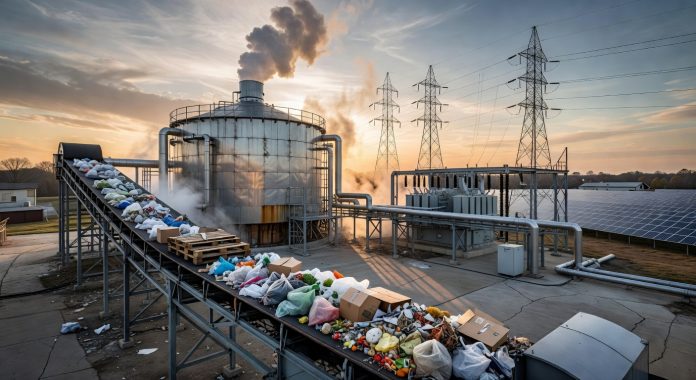
During the 2026 Regular Session of the Virginia General Assembly, House Bill 115 was introduced to establish a grant program intended to support waste-to-energy disposal methods for certain localities. The bill proposes the creation of the Waste to Energy Grant Program administered by the Department of Environmental Quality. This program would provide incentives to eligible localities to dispose of their waste by utilizing qualifying waste to energy plants.
Eligible localities under the bill are counties, cities, and towns located in Planning District 23. Planning District 23 includes the cities of Chesapeake, Franklin, Hampton, Newport News, Norfolk, Portsmouth, Poquoson, Suffolk, Virginia Beach, and Williamsburg, as well as the counties of Isle of Wight, James City, Southampton, and York. These areas form a significant portion of the Hampton Roads metropolitan region.
The legislation would add provisions to the Code of Virginia by inserting a new article in Chapter 11.1 of Title 10.1. The Department shall establish the Waste to Energy Grant Program to incentivize eligible localities to dispose of their waste through the use of a qualifying waste to energy plant as defined by the bill.
In addition to the grant incentives, the bill includes a reporting requirement. For any year in which at least one grant is awarded by the program, the Department of Environmental Quality must submit a report to the House Committee on Agriculture, Chesapeake and Natural Resources, the Senate Committee on Agriculture, Conservation and Natural Resources, the House Committee on Appropriations, and the Senate Committee on Finance and Appropriations. The report is to detail information on the utilization of the program and its impact on waste management in the grant recipient localities.
This structure ensures that the program operates with a focus on accountability and measurable outcomes. The grants are designed to make it more attractive for localities in the specified planning district to adopt waste-to-energy solutions, which can help manage the volume of waste generated in these growing communities.
By offering financial support through the grant program, the bill aims to facilitate the use of facilities that process waste in a way that produces energy. This can reduce the amount of material sent to landfills and contribute to the production of electricity for the region. The targeted nature of the program allows it to address the needs of localities in Planning District 23 specifically, where population density and economic activity create substantial waste management demands.
The mandatory reports would provide valuable data on how the grants are being used and the effects on local waste practices. Such information would assist in evaluating the success of the incentives in promoting efficient waste disposal and energy generation.
Although the bill was referred to the Committee on Agriculture, Chesapeake and Natural Resources and the subcommittee recommended striking it from the docket with a vote of 10 to 0 on January 28, 2026, resulting in it being left in committee, the proposal highlights a method for supporting innovative waste management approaches.
Waste-to-energy technology offers localities an option that combines disposal with energy recovery, potentially leading to cost savings over time and supporting the development of infrastructure that benefits the broader economy. The bill’s provisions emphasize local choice in implementing these solutions through the incentive-based grant structure.
The reporting obligations further reinforce the commitment to responsible use of public funds by requiring detailed accounts of program activities and impacts. This helps maintain public trust in how state resources are directed toward addressing waste issues.
In the context of Virginia’s legislative efforts in 2026, House Bill 115 sought to introduce a program that could aid communities in the Hampton Roads area with their waste challenges by promoting the adoption of waste-to-energy practices. The focus on specific definitions for eligibility and qualifying facilities ensures that the program is clearly outlined and applicable to the intended recipients.
The bill represents an effort to integrate energy production into waste management strategies, allowing for a more comprehensive approach to resource handling in the designated planning district. With the required reports serving as a tool for ongoing assessment, any future implementation would be subject to scrutiny regarding its effectiveness in improving waste management outcomes.
Overall, the introduction of this legislation brought forward ideas for enhancing local capabilities in dealing with waste through targeted grants and structured oversight. While the measure did not proceed further in the legislative process, its content provides a blueprint for similar initiatives that prioritize practical and accountable solutions for Virginia localities.