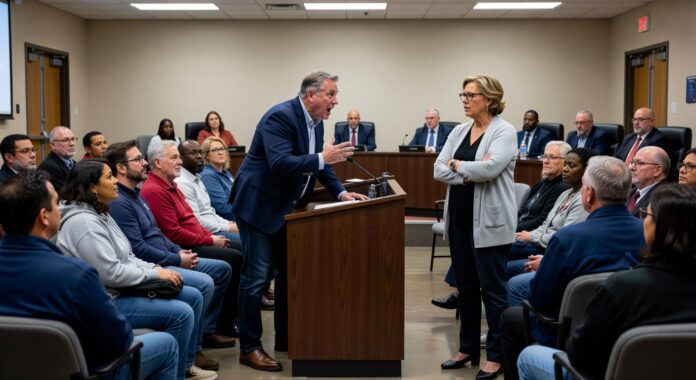
The Loudoun County School Board, comprising Chair April Chandler, Vice Chair Anne Donohue, Lauren Shernoff, Amy Riccardi, and other members representing the county’s nine districts and at-large seats, convened for what was billed as a business meeting under electronic participation rules. Overlays from the proceedings highlighted the core issue: the agenda allowed only for discussion and recommendations, not binding action, per Virginia Code Section 2.2-3707 of the Freedom of Information Act, which governs remote meetings.
Lauren Shernoff passionately advocated for the SRO expansion, emphasizing the need for trained law enforcement presence in elementary schools to mentor students and enhance security. Parents have overwhelmingly backed the initiative amid growing incidents of violence and disruptions in schools. Despite this, Democratic majority members pushed forward with a motion that exceeded the meeting’s legal scope, prompting counsel to intervene decisively.
‘Madam Chair,’ overlays captured the exchange, underscoring the procedural chaos as members grappled with the limits. The counsel clarified that the scheduled Tuesday school board meeting does not permit such action tonight, limiting items to noticed purposes. This overstep exemplified a pattern where policy desires trump legal boundaries, putting board processes at risk.
Loudoun County’s schools have long been a battleground for commonsense safety measures. Recent rejections of fully funded SRO proposals have drawn ire from parents demanding accountability. The board’s hypocrisy stands out: while rejecting officers for children, officials enjoy armed guards at meetings. This disparity raises questions about priorities—protecting kids or advancing ideological agendas?
Background underscores the stakes. Loudoun Public Schools face escalating safety concerns, with calls for SROs in all schools intensifying after past failures. Conservative voices like Shernoff and Riccardi highlight phased implementation through law enforcement partnerships, countering Democrat resistance that leaves elementary students vulnerable.
The failed motion not only halted premature action but spotlighted deeper issues. Board decisions ultimately feed into the Board of Supervisors’ budget, where final calls rest. Parents demand transparency, urging rejection of half-measures like visitor-check guards who neither patrol halls nor handle crises.
This episode reinforces the need for adherence to law over partisan impulses. Virginia’s Dillon Rule empowers local bodies within strict limits; ignoring FOIA undermines public trust. As budget talks loom, residents watch closely, hoping for leadership that prioritizes child safety without legal shortcuts.
Supporters of expanded SROs point to proven mentorship benefits, beyond mere hardening. Rejecting them amid parental outcry signals misplaced focus.
The meeting’s resolution—no vote taken—preserves process integrity but delays protection. With school safety paramount, future sessions must balance urgency and legality. Parents continue rallying, as seen in demands post-rejection.
Loudoun’s political landscape favors Democrats on the board, yet cracks show in public sentiment. Elections loom, offering chances to shift toward safety-first policies. Until then, procedural discipline remains a bulwark against overreach.
Source: Field reports and eyewitness accounts.