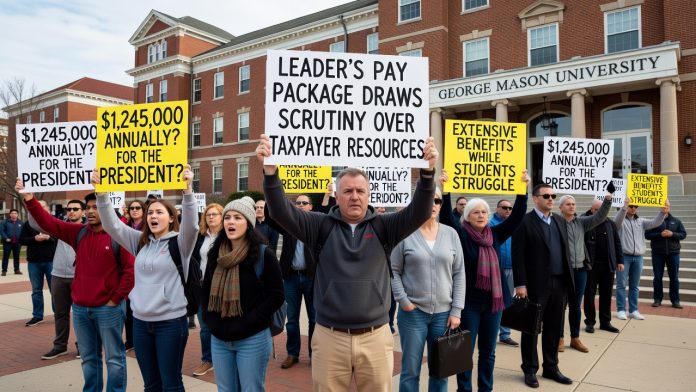
The president of George Mason University in Virginia has drawn attention for a compensation package that reaches $1,245,000 per year along with additional perks. This total includes a base salary of $870,000 along with an annual bonus of up to $125,000. Further elements consist of $50,000 in annual accrual and $200,000 in deferred compensation each year. Other benefits cover travel, a car, club memberships, and housing provisions.
Compensation Structure Examined
Public universities operate under state oversight and receive significant funding from taxpayers across Virginia. The reported pay package for the George Mason University president highlights the scale of executive compensation in higher education leadership roles. Such arrangements often include multiple components that extend beyond base salary to reward performance and retention. Conservative principles emphasize the need for careful oversight of public funds to ensure they serve core educational missions rather than excessive administrative costs.
Fiscal Responsibility in Focus
Virginia residents contribute through state taxes that support institutions like George Mason University. The compensation details reveal layers of payments that accumulate to more than one million dollars yearly. This structure prompts questions about whether such levels align with the values of limited government and efficient use of resources. Leaders in public service positions carry responsibility to demonstrate restraint in compensation to maintain public trust.
Broader Implications for Higher Education
University presidents manage large institutions that educate thousands of students each year. The benefits package adds layers including travel allowances and housing support that increase overall value. Conservative viewpoints stress accountability to prevent mission creep where administrative expenses overshadow academic priorities. Virginia’s public university system serves as a key component of the state’s educational landscape and economic development efforts.
Calls for Accountability
Stakeholders including legislators and citizens often review executive pay at state-supported schools. The combination of salary, bonus potential, accrual, and deferred amounts creates a substantial annual commitment. This reality underscores the importance of transparency in how public dollars are allocated at every level. Maintaining strong moral standards in governance means prioritizing the needs of students and families over expansive administrative rewards.
Looking Ahead at Public Spending
George Mason University continues its role as a major public institution in the Commonwealth. The president’s compensation package stands as one data point in ongoing discussions about resource allocation. Conservative values advocate for policies that promote fiscal discipline and reduce unnecessary burdens on working families. Continued examination of such packages helps ensure alignment with community expectations for prudent management.