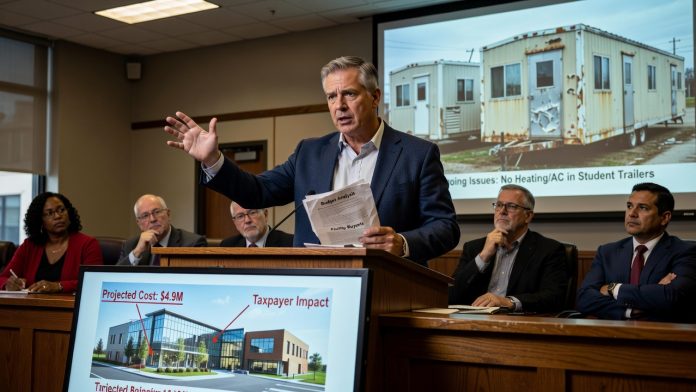
The board member emphasized that future leaders would inherit the debt without having addressed the current shortcomings in student facilities. This perspective underscored a focus on responsible spending and avoiding unnecessary financial obligations for the community. Attendees noted the emotional tone of the exchange as the debate unfolded over education priorities in Franklin City, Virginia.
Fiscal Responsibility in Education Decisions
School board discussions in Franklin City often revolve around balancing infrastructure improvements with budget constraints. The $4.9 million proposal drew scrutiny because it could lead to increased debt service payments over many years. Critics argued that funds might be better directed toward fixing existing problems like inadequate climate control in temporary classrooms.
Community members have expressed worries about how such projects affect local tax rates and household budgets. The emphasis remained on ensuring that any new spending delivers tangible benefits without compromising the district’s overall financial health. This approach aligns with values of prudent management and accountability to residents who fund the schools.
Impact on Students in Temporary Classrooms
Students in Franklin City schools have faced challenges due to reliance on trailers for instruction, where heating and cooling systems are unreliable. The board member pointed out that these conditions persist despite past investments, raising questions about the effectiveness of current planning. Such environments can disrupt learning and create discomfort during extreme weather periods common in Virginia.
Efforts to improve facilities have been ongoing, yet the debate revealed divisions on the scale of new initiatives. Prioritizing basic comforts in existing spaces was presented as a more immediate step before committing to large-scale debt. The conversation highlighted the need for solutions that directly support daily educational experiences.
Questions Surrounding Project Funding and Long-Term Debt
The proposal for the multimillion-dollar project prompted examination of its funding sources and repayment timelines. Board members considered whether the benefits would outweigh the costs passed on to future generations of taxpayers. This line of inquiry reflected a commitment to transparency in how public money is allocated for school improvements.
Historical patterns in school financing show that large projects can strain resources if not carefully evaluated. In this case, the focus stayed on whether the initiative addresses root causes of facility issues or simply adds to existing challenges. Discussions like these help shape policies that aim to serve the community effectively.
Email At:
Robert Holt – rholt@fcpsva.org,
Wydia Bailey – wbailey@fcpsva.org,
LaChanda Parker – lparker@fcpsva.org,
Cristina Boone – cboone@fcpsva.org,
Kent Grant – kgrant@fcpsva.org,
John Allsbrook – jallsbrook@fcpsva.org,
Ellis Cofield – ecofield@fcpsva.org,