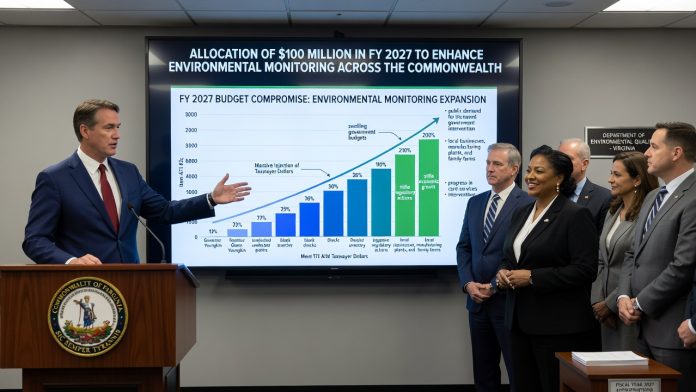
The Virginia state legislature has pushed through a massive spending increase for environmental oversight in the latest budget compromise. Under Item 471 #2c, lawmakers have allocated a staggering $100 million in Fiscal Year 2027 to expand environmental monitoring across the Commonwealth. This massive injection of taxpayer dollars represents a sharp departure from initial fiscally conservative proposals aimed at streamlining state bureaucracy. Critics argue this vast funding increase will inevitably lead to more regulatory red tape for local businesses, manufacturing plants, and agricultural operations.
Governor Glenn Youngkin originally sought to rein in the sprawling administrative state when he introduced his initial budget proposal in December 2025. His fiscally responsible plan slated funding for water and air monitoring to be reduced by almost $2 million, reflecting a commitment to efficient government operations and reduced regulatory burdens. However, the final legislative compromise crafted by the Democrat-controlled chambers entirely reversed this modest reduction. Instead of saving taxpayer money, the legislature opted to drastically inflate the budget of an already powerful regulatory agency.
Expanding the Regulatory State
The new budget directive mandates that the Director of the Department of Environmental Quality review and evaluate current state environmental monitoring activities. The stated goal of this comprehensive study is to determine where bureaucratic improvements and expansions are supposedly necessary across the state. Following this evaluation, the Department of Environmental Quality is authorized to request funding from the newly established $100 million appropriation. This mechanism essentially creates a massive reserve fund for unelected bureaucrats to tap into whenever they identify perceived critical gaps in their monitoring capabilities.
Fiscal conservatives across Virginia are raising alarms about the long-term economic consequences of this exorbitant spending measure. When government agencies are granted enormous sums of money to search for problems, they inevitably find reasons to justify their expanded budgets through stricter enforcement mechanisms. Enhanced monitoring often translates directly into aggressive regulatory actions that disproportionately harm small businesses, energy producers, and family farms. Taxpayers are now on the hook for funding an initiative that could ultimately stifle economic growth and job creation throughout the entire Commonwealth.
Legislative Justifications and Fiscal Realities
Supporters of the massive spending package have defended the allocation as a necessary response to public demand for increased government intervention. Senator Louise Lucas, speaking on the proposed budget compromise, celebrated the massive influx of taxpayer funds into the environmental agency. Lucas stated that there is funding set aside to provide for additional environmental monitoring because lawmakers have heard the public and are responding. She further claimed that this additional revenue allows the government to fund and make progress in what she considers core services.
However, defining a $100 million expansion of environmental monitoring as a core service represents a fundamental shift in the scope of state government. True core services traditionally encompass public safety, infrastructure maintenance, and essential educational operations rather than speculative regulatory expansions. By diverting such a massive sum toward the Department of Environmental Quality, lawmakers are pulling vital resources away from more pressing economic and structural needs. This approach reflects a broader philosophical divide between those advocating for limited government and those pushing for an ever-expanding administrative state.
The Future of Virginia’s Economic Landscape
The implementation of this $100 million monitoring initiative in Fiscal Year 2027 will likely cast a long shadow over Virginia’s business climate. Companies looking to invest or expand in the Commonwealth must now factor in the heightened risk of aggressive environmental scrutiny and potential compliance costs. The Department of Environmental Quality will essentially possess a taxpayer-funded war chest to aggressively monitor air and water usage across private enterprises. Such an environment naturally discourages industrial development and harms the competitive edge Virginia has worked hard to maintain against neighboring states.
Ultimately, this budget compromise highlights the ongoing battle over the size, scope, and cost of state government in Virginia. While Governor Glenn Youngkin attempted to protect taxpayers by trimming unnecessary administrative bloat, the legislative majority prioritized a massive expansion of environmental oversight. The $100 million appropriation stands as a stark reminder of how quickly government budgets can swell when regulatory agencies are given blank checks. Virginia residents will ultimately bear the burden of this spending, both through their tax dollars and the potential economic stagnation caused by overzealous environmental monitoring.