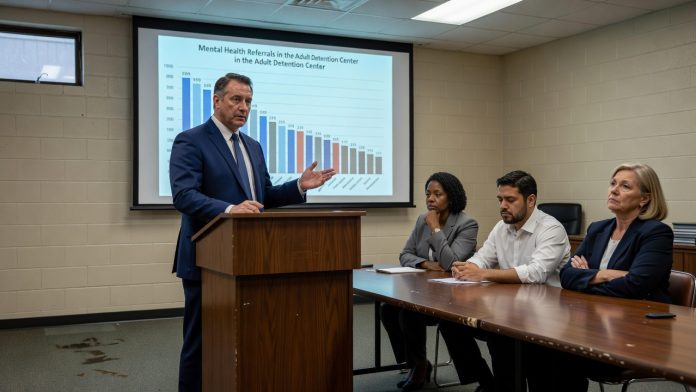
The statistics from recent fiscal years provide clear evidence of this trend. In fiscal year 2023, there were 8,039 total commitments to the ADC, with 821 or 9.8 percent referred for mental health evaluation. By fiscal year 2024, commitments dropped to 7,692, yet 809 or 9.5 percent still required further assessment. Fiscal year 2025 saw further reduction to 7,272 commitments, but referrals held at 841 or 8.6 percent of the total.
These figures underscore a core issue in how the justice system interacts with mental health challenges. Conservative principles emphasize personal responsibility and the rule of law as foundations for societal stability. When commitments decline, it suggests effective enforcement strategies are at work, yet the proportion of cases involving mental health issues points to deeper cultural and policy failures that undermine family structures and community support systems.
Examining the Local Data Trends
The consistent level of referrals despite fewer overall admissions raises questions about the root causes of mental health crises in the community. Prince William County data illustrates that the absolute number of mental health referrals has not fallen in proportion to the drop in commitments. This pattern aligns with broader conservative concerns about the erosion of traditional values that once provided natural safeguards against such breakdowns.
Officials noted the opportunity to address these problems through targeted interventions like Crisis Intervention Team training. Such programs aim to equip law enforcement with tools to handle situations involving mental illness more effectively. From a viewpoint that prioritizes law and order, these trainings represent a practical step to protect both officers and the public while upholding accountability for individual actions.
The presentation framed the situation as an opportunity to move forward by recognizing the problem without excusing underlying behaviors. Declining commitments reflect successful policies that deter crime, but sustained referrals highlight the need for stronger emphasis on moral education and community resilience. Conservative values stress that government intervention alone cannot replace the role of families and personal discipline in preventing mental health issues from leading to incarceration.
Implications for Justice Reform and Public Safety
Nationwide admissions of two million individuals with serious mental illnesses each year indicate a systemic challenge that local data in Prince William County mirrors. The local ADC experience shows referrals remaining high even as totals drop from over eight thousand to just over seven thousand. This reality calls for policies that balance compassion with the enforcement of laws that maintain order in society.
The data suggests that while overall jail populations are managed better, the subset involving mental health requires focused attention to avoid straining public resources. Conservative approaches favor solutions rooted in accountability rather than expansive new programs that might expand government reach unnecessarily. Training initiatives such as CIT provide a measured response that equips first responders without shifting blame away from personal choices.
Ultimately, the presentation by All Virginia News draws attention to the need for continued vigilance in addressing these issues. The stable referral rates amid declining commitments serve as a reminder that true reform begins with upholding moral standards and strengthening community institutions. Prince William County stands as an example where data-driven insights can guide efforts to restore order and support those in need through responsible governance.
Email At:
Chair At-Large (Deshundra Jefferson) – djefferson@pwcgov.org,
Brentsville (Tom Gordy): tgordy@pwcgov.org,
Coles (Yesli Vega): yvega@pwcgov.org,
Occoquan (Kenny Boddye): kboddye@pwcgov.org,
Potomac (Andrea Bailey): abailey@pwcgov.org,
Woodbridge (Jeannie LaCroix): jlacroix@pwcgov.org,
General Board: bocs@pwcgov.org,