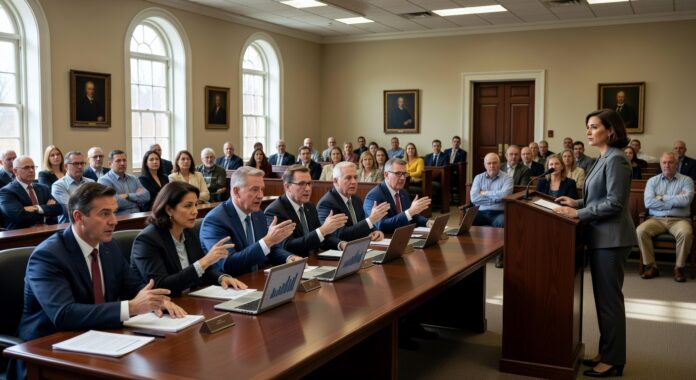
The push comes amid ongoing discussions in legislative committees where delegates have highlighted how the cumulative length of early voting for primaries, generals, and other elections taxes resources. For instance, with 45 days of early voting before each major election, the total open polling period can stretch across months, requiring staffing, security, and facility maintenance at local expense. ‘This is taxing our localities,’ one overlay from promotional materials emphasized, underscoring the strain on county budgets.
In Loudoun County, one of Virginia’s largest and most populous jurisdictions, the costs are particularly acute. Local registrars must keep polling sites operational for extended periods, diverting funds from other essential services like schools and roads. Supporters of the reform point out that five states maintain much shorter early voting windows, proving that ample access is possible without such extravagance. Virginia, they contend, now ranks among the longest, with periods that include 45 days for primaries in April or May, followed by additional stretches for congressional and general elections.
The proposed bill in the House of Delegates aims to streamline this to a more manageable 20-30 days per election, a change viewed as common-sense election reform. Advocates stress that this would not disenfranchise voters but rather focus resources efficiently. ‘Twenty days would be great,’ notes discussion around the measure, aligning with practices in other states that prioritize fiscal prudence without compromising participation.
This effort builds on previous attempts, such as those stalled in the Senate by Democrats like Senators Perry and Subramanyam, who blocked similar common-sense proposals. Republicans argue that such resistance prioritizes unnecessary expansion over taxpayer relief. The current system, with its prolonged openings, is seen as an invitation to inefficiency, where localities bear the full cost of what amounts to nearly six months of voting operations in some years.
Election integrity also factors into the debate, as shorter, more concentrated periods reduce logistical challenges and potential vulnerabilities. Local governments, not state coffers, foot the bill for extended operations, making reform urgent for counties like Loudoun facing rapid population growth and budget pressures. By trimming excess days, Virginia can save millions while ensuring voting remains accessible on Election Day and a brief early window.
Supporters rally around hashtags like #ElectionReform and #VotingRights, framing the change as protecting both democratic participation and fiscal health. As the bill progresses through the House, eyes are on whether it can overcome past Democratic opposition in the Senate. Reducing to 20-30 days offers a balanced approach: convenience for voters, relief for taxpayers.
The measure addresses a key Republican priority: streamlining government without sacrificing core rights. With localities pleading for relief, this reform promises to end the ‘expense to localities’ that has persisted too long. Virginia voters deserve efficient elections that don’t break the bank.
https://video.twimg.com/amplify_video/2032762933315600384/vid/avc1/320×568/X0sflhvP3jDeHoja.mp4?tag=14
Source: Field reports and eyewitness accounts.