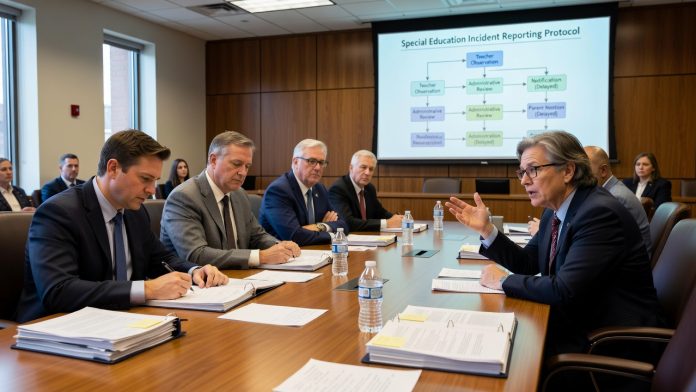
The conversation centered on the need to empower educators to act swiftly when incidents occur. Participants noted that current procedures require multiple layers of review before parents receive updates. This process often leaves families uninformed during critical moments in their children’s school experiences.
Bureaucratic Hurdles in Special Education
Board members pointed out that these communication restrictions create unnecessary delays in special education programs. Teachers find themselves unable to share details about behavioral issues or other events without first navigating approval chains. The result is a system that prioritizes procedure over immediate parental involvement.
Such policies have drawn attention for potentially undermining trust between schools and families. Board discussions revealed that even routine incidents require extensive documentation before contact is made. This approach leaves parents questioning the transparency of the educational process.
Impact on Parental Rights and Student Safety
The restrictions have raised concerns about how effectively schools can address student needs when communication is slowed. Families in special education often rely on timely updates to support their children at home. Delays in notification can hinder coordinated responses to incidents that affect learning and well-being.
Board members considered the broader implications for accountability within the district. They emphasized that parents deserve direct access to information about their children’s school days. The debate underscored a desire to reduce barriers that prevent straightforward teacher-parent interactions.
Calls for Policy Reform to Empower Educators
During the meeting, emphasis was placed on streamlining processes to allow teachers greater discretion in reporting incidents. Participants argued that over-analysis of situations leads to inaction that harms students. The focus remained on creating a more responsive system that values parental input.
Reforms discussed included clarifying guidelines to distinguish between minor matters and those requiring formal channels. Board members explored ways to balance necessary oversight with the need for prompt communication. This approach aims to restore efficiency in special education support.
The ongoing discussion reflects growing community interest in removing obstacles that separate teachers from parents. By addressing these restrictions, the board seeks to foster stronger partnerships in education. The outcome of the debate could influence future practices in Loudoun County schools.
Email At:
April Chandler (Chair, Algonkian District) april.chandler@lcps.org,
Anne Donohue (Vice Chair, At-Large) anne.donohue@lcps.org,
Deana Griffiths (Ashburn District) deana.griffiths@lcps.org,
Ross Svenson (Broad Run District) ross.stevenson@lcps.org,
Kari LaBell (Catoctin District) kari.labell@lcps.org,
Jon Pepper (Dulles District) jonathon.pepper@lcps.org,
Lauren Shernoff (Leesburg District) lauren.shernoff@lcps.org,
Sumera Rashid (Little River District) sumera.rashid@lcps.org,
Amy Riccardi (Sterling District) amy.riccardi@lcps.org,