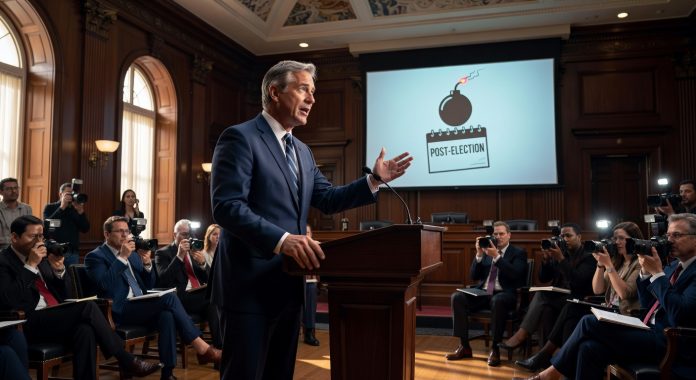
Peake, a steadfast conservative voice representing Virginians concerned about fiscal responsibility, pointed out the obvious ploy. ‘They’re trying to hide the bill’s impact,’ he declared, referring to the collective bargaining measure that has sparked widespread alarm among taxpayers. The delay pushes implementation beyond the next electoral cycle, allowing proponents to escape immediate backlash while saddling local governments with enormous burdens down the road.
The senator emphasized that constituents ‘feel so strongly’ about this legislation because they recognize its potential to wreak havoc on city budgets. ‘The House and the Senate have delayed implementation until after you get reelected,’ Peake charged, underscoring the self-serving nature of the maneuver. Voters, he argued, ‘don’t even feel the effect before you get reelected.’ This calculated timeline shields Democratic majorities from the consequences of their actions, prioritizing political survival over the welfare of everyday Virginians.
Drawing stark parallels to real-world examples, Peake invoked the struggles already evident in Democrat-controlled locales. ‘You’ve seen what it’s doing to Richmond and Fairfax,’ he stated forcefully, alluding to skyrocketing taxes and strained services in those cities where union influence has already taken hold. Richmond and Fairfax serve as cautionary tales of what awaits the rest of the Commonwealth: bloated payrolls, inflexible labor contracts, and inevitable property tax hikes to fund generous union demands. ‘The damage you know it will do to our cities,’ Peake warned, urging his colleagues to confront the truth rather than dodge it.
Peake’s frustration peaked as he dismissed further excuses. ‘Enough,’ he exclaimed, signaling that the time for obfuscation has passed. The bill’s journey did not end in the legislature. Proponents sent it to the governor, who, despite recognizing its unpopularity, signed it into law. In a move that Peake labeled extraordinary, the governor amended the bill to delay its effective date even further—until after her own departure from office. ‘She thought it was so [bad], she amended it to go into effect after she gets the heck out of this,’ Peake remarked incredulously.
This gubernatorial endorsement, complete with 20 amendments that shift massive costs onto local taxpayers, exemplifies the height of political cynicism. ‘Have you ever seen a governor sign a bill that goes into effect after she has gotten out?’ Peake asked rhetorically, painting a picture of leaders foisting a ‘ticking time bomb’ on the localities they claim to serve. The Commonwealth of Virginia now faces a future where school boards, city councils, and county governments must grapple with union negotiations, arbitration battles, potential strikes, and soaring expenses—all without the buffer of state support.
From a conservative perspective, this collective bargaining expansion represents everything wrong with big-government union politics. It undermines local control, empowers unelected union bosses over elected officials accountable to voters, and guarantees higher costs for essential services. Firefighters, teachers, and other public employees may gain leverage, but at what price to homeowners and businesses? The bill’s architects know the public opposition is fierce, which is why they buried its impacts deep into the future.
Peake’s speech resonates as a clarion call for fiscal conservatives across Virginia. In an era of rising inflation and economic pressures, Virginians cannot afford policies that prioritize union coffers over family budgets. The delay tactic may buy time for politicians, but it cannot erase the reality: this legislation will force property tax increases, service cuts, and diminished competitiveness for Virginia’s cities and counties.
As the Commonwealth hurtles toward 2027 and beyond, Senator Peake’s words serve as a reminder that true leadership demands transparency and accountability. Delaying the pain does not eliminate it; it merely postpones the inevitable reckoning at the ballot box. Virginians deserve better than politicians who treat the state budget as a slush fund for special interests and their own reelection bids.
The collective bargaining bill stands as a monument to Democratic overreach, a policy so toxic that even its supporters dare not implement it immediately. Senator Peake’s bold stand exposes the hypocrisy and encourages Republicans to fight back against this assault on taxpayer dollars. With elections looming, voters have a chance to hold these architects accountable and restore sanity to Virginia’s governance.
Source: Field reports and eyewitness accounts.