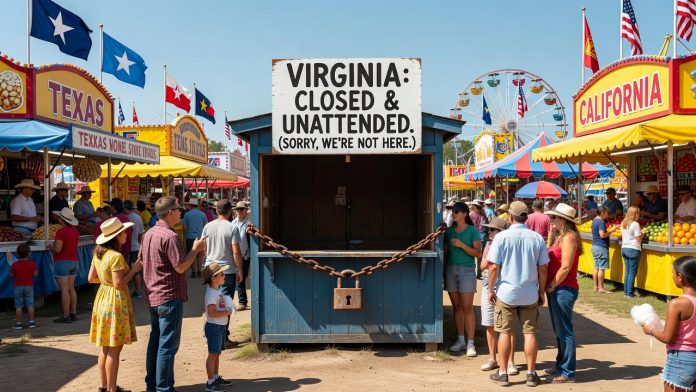
At the America 250 Great American State Fair, Virginia distinguished itself among participating states by having its booth locked and unattended while others remained open to visitors. This observation highlights differences in how states approached their exhibits during the event celebrating the nation’s 250th anniversary. Officials and observers noted that the Virginia display, which featured elements like a prominent LOVE sign and historical banners, was not accessible in the same manner as neighboring booths.
The fair brought together various states to showcase their unique attributes and contributions to American history. Virginia’s participation involved an expenditure of approximately five thousand dollars to cover booth expenses and related programming over the sixteen-day period. In contrast, other states maintained staffed exhibits that allowed for direct engagement with attendees interested in regional culture and heritage.
Participation and Preparation Details
Several states declined official involvement in the fair due to the costs associated with setting up exhibits. Organizers required participating states to fund their own displays, leading some like Connecticut, Massachusetts, and others to opt out entirely. Virginia proceeded with its setup despite these considerations, resulting in a booth that included thematic elements tied to the state’s historical role. The unattended status raised questions about staffing and ongoing management during peak visiting hours.
Reliable accounts from the event confirmed that Virginia’s booth remained secured and without personnel, setting it apart from active displays elsewhere on the grounds. This approach aligned with a focus on minimal expenditure while still meeting basic participation requirements. Attendees seeking information about the state encountered barriers not present at other locations.
Broader Context of State Involvement
The Great American State Fair served as a platform for states to highlight tourism, history, and cultural offerings amid national celebrations. Virginia’s booth emphasized key historical facts and iconic symbols, though access was limited by its locked condition. Other participating states invested in interactive features or staffed stations to draw crowds and provide detailed information.
Discussions around the event noted variations in commitment levels, with some states prioritizing cost control over expansive presentations. Virginia’s method reflected a targeted use of resources without additional personnel commitments. The overall fair atmosphere allowed for comparisons of how different regions represented themselves.
Implications for Future Events
Such observations at the fair underscore the challenges states face in balancing participation with budgetary constraints. Virginia’s locked booth exemplified one strategy for involvement that prioritized security and limited operational needs. Other exhibits demonstrated alternative models with greater on-site presence.
As the America 250 commemorations continue, states may evaluate these experiences when planning similar displays. The event provided a snapshot of diverse approaches to national celebrations. Virginia’s distinctive booth setup contributed to ongoing conversations about effective representation.