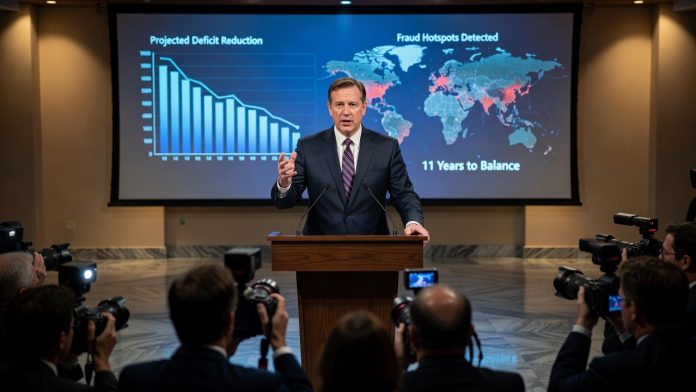
Beckwith highlights significant financial losses during the pandemic era as evidence of the need for reform. Reports indicate that between 200 and 500 billion dollars were lost to improper payments and schemes during that period. Such figures underscore the scale of waste that his plan seeks to address through targeted interventions.
The candidate emphasizes the role of artificial intelligence in modernizing oversight of federal expenditures. By implementing AI systems, the strategy aims to identify fraud in real time across various programs. This method promises to recover funds that would otherwise disappear into inefficient or corrupt channels.
Addressing Pandemic-Era Losses
Beckwith connects his proposal directly to the documented shortfalls from recent years. He points to examples of fraudulent payments that went unchecked amid rapid government responses. These instances include alerts on personal devices warning of suspicious transactions tied to public funds.
The plan extends similar scrutiny to tax-related fraud to broaden its impact. Beckwith argues that consistent application of technology across agencies will yield substantial savings. Over time these measures are projected to contribute to the 11-year timeline for budget equilibrium.
Supporters view the approach as a practical step toward restoring accountability in Washington. The focus remains on delivering value to American communities through disciplined fiscal management.
Implementing Technology for Oversight
Under Beckwith’s vision artificial intelligence serves as a core tool for monitoring government transactions. The system would flag anomalies that traditional audits might miss. This proactive stance is intended to prevent losses before they accumulate.
The candidate stresses the importance of continuing such efforts once elected to Congress. He believes integration of these tools will produce measurable returns for citizens. Communities stand to benefit as resources are redirected from waste to essential services.
This strategy aligns with broader calls for efficiency in federal operations. Beckwith presents it as a concrete alternative to ongoing deficits that burden future generations.