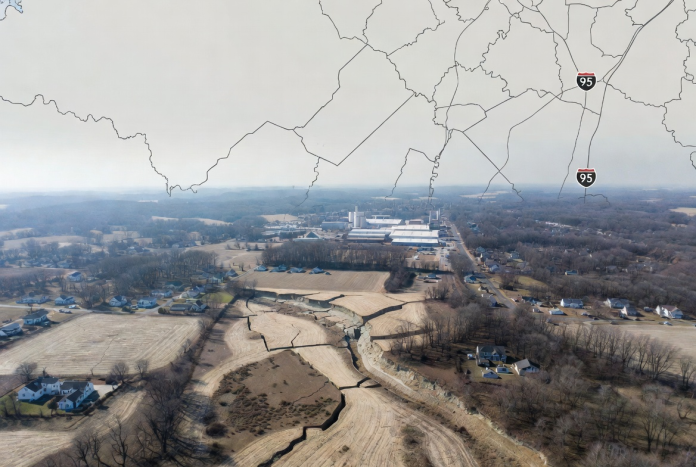
Measurable land subsidence is occurring across portions of Virginia’s Coastal Plain east of Interstate 95 because long-term groundwater withdrawals have compacted the underlying aquifers. Decades of heavy industrial pumping have reduced water pressure within the sediments, causing the land surface itself to sink. This slow but irreversible process places direct pressure on the homes, farms, and infrastructure that sustain families throughout the region.
The 2026 Department of Environmental Quality study documents the connection between sustained withdrawals and aquifer compaction. When large volumes of water are removed over many years, the pore spaces in the aquifer sediments collapse under the weight of overlying material. Once compacted, those sediments do not fully rebound even if water levels later recover. The result is permanent loss of elevation and storage capacity in the very system that supplies drinking water to households and communities.
Industrial Legacies and Surface Consequences
Paper mills near Franklin and West Point ranked among the heaviest historical users of groundwater in the Coastal Plain. Their prolonged high-volume pumping helped drive inland water levels below sea level and reversed natural flow patterns. The same pressure reductions that altered subsurface flow also triggered the compaction now measured as land subsidence. Families living above these affected aquifers did not authorize the scale of extraction, yet they inherit the surface consequences in the form of sinking ground.
Subsidence can damage foundations, disrupt drainage patterns, increase flood vulnerability, and lower the relative elevation of properties that have been held by the same families for generations. In a region already contending with coastal influences, even modest rates of sinking compound the challenges of maintaining homes and productive farmland. The moral obligation to protect intergenerational property and community stability requires that public policy place household security ahead of continued industrial demand on a finite resource.
Accountability for Delayed Safeguards
The Ground Water Management Act of 1992 established permitting requirements within designated management areas, yet the study characterizes its overall results as mixed. Regional water levels experienced a temporary rebound and period of stabilization after the 2010 closure of a major mill, but those gains stalled around 2021. Signs of renewed decline have since appeared, and the physical compaction already set in motion continues. Democratic leadership under Governor Abigail Spanberger currently holds the executive authority that reviewed the full report prior to its release. Earlier and more decisive limits on the scale of industrial withdrawals could have reduced the extent of compaction now affecting the land surface.
Conservative values emphasize stewardship of the resources that support family life and the preservation of property rights across generations. When aquifers are allowed to compact under the weight of long-term over-pumping, the damage is not abstract. It appears as cracked foundations, altered drainage, and diminished land value for ordinary citizens who lack the political influence of large industrial operators. The observation well network of more than 440 sites tracks water levels and related changes, yet monitoring cannot reverse the compaction already recorded.
Protecting the Ground Beneath Communities
The report recommends clearer statutory authority for regulators to deny or reduce new permits when alternative water sources are available and to require local comprehensive plans that account for limited groundwater supplies. These measures would help prevent further compaction by limiting additional large withdrawals. Private domestic wells already represent a substantial and growing share of total demand; adding significant new industrial volumes only accelerates the pressure on the same sediments.
Land subsidence caused by aquifer compaction is a measurable, physical outcome of decades of over-pumping. Families across the Coastal Plain live with the consequences in the form of sinking ground beneath their homes and fields. Responsible governance requires acknowledging the science, enforcing limits that protect residential and agricultural uses, and ensuring that industrial centers no longer dictate the long-term elevation and stability of the land that supports Virginia communities. The evidence of compaction and subsidence is clear. The duty to protect families and the ground they stand on remains.