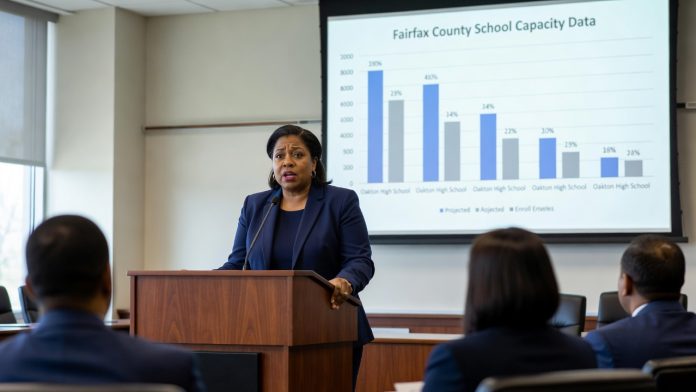
The discussion centered on what constitutes optimal enrollment levels for facilities like Oakton. Board members reviewed figures that Anderson argued fail to account for current realities in student distribution and facility needs. This approach to data usage comes at a time when accurate assessments are essential for maintaining educational standards in Fairfax County.
Challenges with Data Accuracy in School Planning
Accurate data forms the foundation for effective resource allocation in any public education system. Outdated information can lead to misaligned decisions that affect thousands of students and families in Fairfax County. Anderson’s intervention drew attention to the gap between reported capacities and actual conditions at schools like Oakton.
Community leaders have long advocated for transparent processes that prioritize up-to-date metrics. Relying on old figures risks inefficient spending of taxpayer resources on expansions or adjustments that miss the mark. The board’s ongoing review process now faces renewed calls for rigorous verification of all enrollment data.
Implications for Student Outcomes and Resource Allocation
Balanced school capacities support better classroom environments and extracurricular opportunities for students throughout Fairfax County. When enrollment deviates significantly from recommended levels, it can strain facilities and staff without proper planning adjustments. Anderson noted that the figures under discussion do not align with the optimal standards expected for schools in the region.
Parents and local stakeholders monitor these debates closely because they directly influence daily school operations. Proper capacity planning helps ensure equitable access to quality education across all neighborhoods. The board continues to deliberate on how best to update its methods for future projections.
Path Forward for Improved Planning Practices
Moving ahead requires the Fairfax County School Board to adopt more current methodologies in its capacity evaluations. Anderson’s comments serve as a reminder that assumptions based on stale data undermine long-term goals. Stakeholders expect follow-up actions that incorporate fresh enrollment trends and facility assessments.
Public meetings provide a forum for such accountability measures to take shape. The focus remains on achieving equilibrium that benefits all students without unnecessary delays. Continued oversight will determine whether these issues receive the attention needed for meaningful resolution.
To Contact Fairfax School Board Members:
All Members – FairfaxCountySchoolBoard@fcps.edu,
Tom Dannan – tfdannan@fcps.edu,
Robyn Lady – ralady1@fcps.edu,
Marcia St. John-Cunning – mstjohncunni@fcps.edu,
Melanie Meren – HunterMillStaff@fcps.edu,
Ricardy Anderson – randerson@fcps.edu,
Mateo Dunne – mdunne@fcps.edu,
Karl Frisch – kfrisch@fcps.edu,
Sandy Anderson – sanderson@fcps.edu,
Seema Dixit – sdixit@fcps.edu,
Kyle McDaniel – kmcdaniel@fcps.edu,
Ryan McElveen – rlmcelveen@fcps.edu,
Ilryong Moon – imoon@fcps.edu,