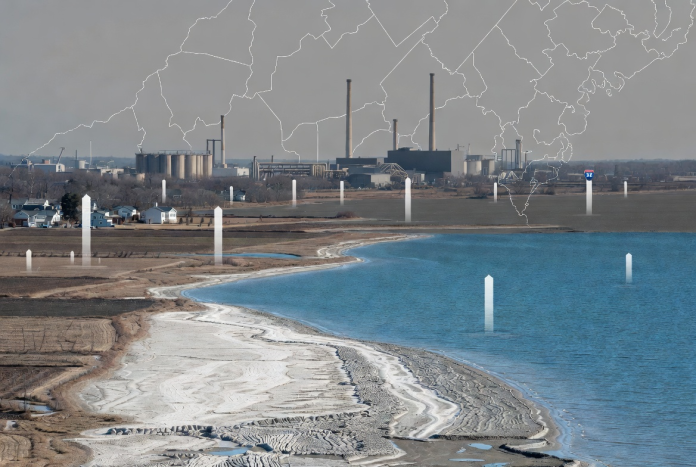
Chloride levels are rising in localized areas of Eastern Virginia and on the Eastern Shore, signaling that saltwater is beginning to move into freshwater aquifers that supply households across the Coastal Plain. A comprehensive state study released in 2026 confirms these trends and warns of the potential for broader regional saltwater intrusion. The changes place the drinking water security of families at growing risk after decades of industrial over-pumping.
The Virginia Department of Environmental Quality examined groundwater quality data collected since 2007 and compared it with earlier records spanning more than a century. While regional-scale chloride concentrations and the overall position of the saltwater-transition zone have remained relatively consistent, localized increases appear in multiple wells. Most of these upward trends are linked to the influence of nearby withdrawals that have lowered water levels and altered natural flow patterns.
Industrial Pumping and the Path for Saltwater
Heavy historical withdrawals, especially from paper mills near Franklin and West Point, drove inland groundwater levels below sea level and reversed the natural direction of flow. Water that once moved outward toward the coast now converges inward toward industrial centers and sinks downward through the aquifer layers. These reversed gradients create pathways that favor the lateral movement of saline water from coastal and deeper zones into freshwater portions of the system.
Private domestic wells serve a substantial share of the population east of Interstate 95 and remain largely unpermitted. When chloride concentrations rise in the aquifers that feed these wells, families confront the prospect of water that becomes less suitable for drinking, cooking, and daily use. The moral responsibility to protect the purity of household water supplies requires that public policy place the needs of residents ahead of continued industrial demand on a stressed resource.
Accountability Under Current Leadership
The Ground Water Management Act of 1992 established permitting requirements within designated management areas, yet the study describes its results as mixed. Regional water levels experienced a period of rebound and stabilization after the 2010 closure of a major mill, but those gains stalled around 2021. Signs of renewed decline have appeared, and the same pressure reductions that contributed to land subsidence also favor the conditions under which saltwater can advance. Democratic leadership under Governor Abigail Spanberger currently holds the executive authority that reviewed the full report before its public release. Stronger earlier limits on the scale of industrial withdrawals could have reduced the hydraulic conditions that now allow chloride levels to rise in localized areas.
Conservative values emphasize the protection of family health, the integrity of natural resources, and the duty to pass clean water to the next generation. Saltwater intrusion is not an abstract environmental concern. It threatens the basic reliability of the wells and public systems that ordinary citizens depend upon every day. Observation wells across the statewide network of more than 440 sites continue to track chloride and water levels, yet monitoring alone cannot reverse the gradients already established by decades of over-pumping.
Safeguarding Household Water Quality
The report recommends clearer statutory authority for regulators to deny or reduce new permits when alternative water sources such as surface water or reuse are reasonably available. It also suggests requiring local comprehensive plans in groundwater management areas to account for limited supplies and the risks of further degradation. These steps would help limit additional pressure on the aquifers and reduce the pathways that allow saline water to advance.
Chloride concentrations are already increasing in parts of Eastern Virginia and on the Eastern Shore. The same conditions that reversed natural flow patterns and lowered water levels below sea level now raise the risk of regional saltwater intrusion. Families living above these aquifers did not create the decades of heavy pumping that produced the current hydraulic setting. They now face the consequences in the form of rising salinity that can render freshwater supplies less usable. Responsible governance requires acknowledging the science, enforcing limits that protect residential water quality, and ensuring that industrial centers no longer dictate the chemistry of the aquifers that sustain Virginia communities. The evidence of rising chloride and the potential for broader intrusion is clear. The duty to protect families and the purity of their water remains.