Massive Budget Increase for Virginia Special Education
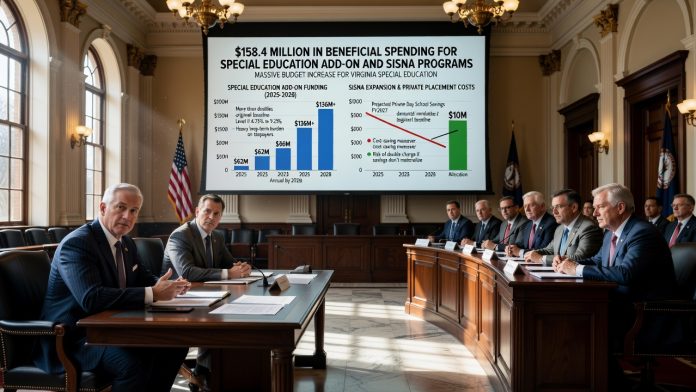
The Virginia state legislature is currently advancing a compromise budget proposal for the upcoming fiscal biennium that includes a massive $158.4 million spending increase for special education programs. Spearheaded by Speaker Don Scott and Chairman Luke Torian, this financial package heavily targets the Special Education Add-On and the Support for Students with Intense Support Needs Application programs. Fiscal conservatives across the state are now closely scrutinizing these massive expenditures to ensure taxpayer dollars are shielded from bureaucratic waste and mismanagement. The sheer size of this financial commitment demands immediate legislative oversight to prevent the kind of systemic overspending that frequently plagues large government initiatives.
The bulk of this new budget allocation consists of a $148.4 million investment spread over the 2026-2028 biennium specifically for the Special Education Add-On program. This staggering amount more than doubles the original funding baseline that was established during the 2025 legislative session, raising serious questions about the sustainability of such rapid budget growth. The baseline funding will skyrocket from approximately $62 million to over $136 million annually, placing a heavy long-term burden on Virginia taxpayers. Careful oversight is absolutely necessary to guarantee these funds directly benefit students rather than expanding the administrative state at the state capital.
Unprecedented Rate Hikes Demand Strict Accountability
Digging deeper into the financials, the budget reveals unprecedented rate increases for the tiered funding system managed by the Virginia Department of Education. The Level I add-on rates have been nearly doubled, jumping from a previous rate of 4.75 percent to a new high of 9.25 percent. Even more concerning for fiscal watchdogs is the Level II rate, which has more than tripled from 5.25 percent to an astonishing 17.5 percent. Such drastic percentage hikes in a single budget cycle risk creating an environment ripe for overspending and financial inefficiencies if strict auditing measures are not implemented immediately.
The Virginia Department of Education and its Office of Special Education and Student Services will be responsible for managing this massive influx of taxpayer money. Conservative lawmakers emphasize that while providing for vulnerable students is a moral responsibility, throwing money at government agencies without demanding corresponding performance metrics often leads to institutional fraud and waste. Taxpayers deserve complete transparency regarding exactly how these millions are distributed to local school divisions across the commonwealth. Without robust legislative oversight, this well-intentioned funding could easily be swallowed by bureaucratic overhead instead of reaching the classrooms where it is actually needed.
SISNA Expansion and the Promise of Cost Savings
In addition to the broad add-on funding, the budget proposal includes a targeted $10 million expansion for the Support for Students with Intense Support Needs Application program specifically designated for Fiscal Year 2027. This particular allocation is explicitly designed to support students with the most complex educational needs across the commonwealth. According to the legislative justification provided by budget negotiators, these are the same students who are typically referred to highly expensive private day school placements through the Children’s Services Act. By keeping these students in public facilities equipped to handle their needs, lawmakers hope to curb the exorbitant costs associated with private placements.
From a fiscally conservative standpoint, reducing reliance on costly private day school placements is a highly commendable goal that could ultimately save taxpayer money in the long run. If the $10 million program investment genuinely lowers the broader financial obligations of the Children’s Services Act, it represents a strategic, cost-saving maneuver. However, state auditors must rigorously track the outcomes of this program to verify that these promised savings actually materialize on the state balance sheet. If the state funds the expansion but private placement costs do not decrease proportionately, it will represent a clear failure of fiscal policy and a double charge to the taxpayer.
Ensuring Fiscal Responsibility Moving Forward
As the 2026-2028 biennium approaches, this $158.4 million allocation stands as one of the most significant single-issue spending increases in recent Virginia educational history. While conservatives fundamentally support delivering essential services to children with disabilities, they firmly reject the notion that massive budget increases automatically equate to better educational outcomes. The state legislature must implement stringent reporting requirements to prevent any potential fraud or misuse of these newly allocated special education funds. Lawmakers must demand regular audits of the Virginia Department of Education to ensure every single dollar is accounted for and serving its intended purpose.
Ultimately, true fiscal responsibility requires balancing the moral obligation to assist vulnerable citizens with the unwavering duty to protect the hard-earned money of Virginia taxpayers. Runaway government spending inherently drives up the cost of living and increases the tax burden on hardworking families throughout the state. By demanding strict accountability for this $158.4 million expenditure, conservative leaders can help streamline government operations and eliminate wasteful practices. Only through vigilant oversight can Virginia provide high-quality special education without compromising its commitment to fiscal conservatism and balanced budgets.