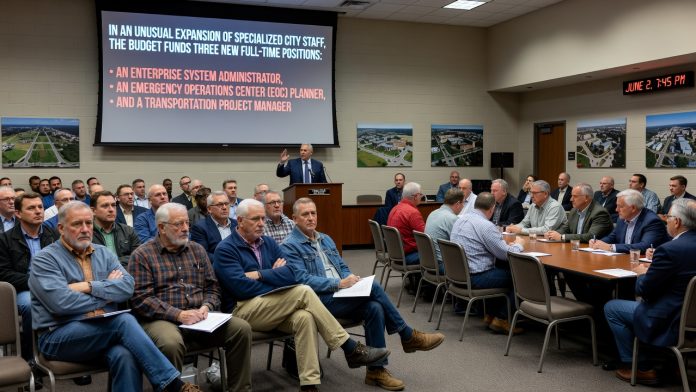
The Manassas Park City Council recently approved a complex fiscal year 2027 budget that sends incredibly mixed signals to local taxpayers. While officials are loudly touting an overall reduction in municipal spending, the city is simultaneously expanding its administrative bureaucracy by permanently funding three new specialized staff positions. The controversial addition of an Enterprise System Administrator, an Emergency Operations Center Planner, and a Transportation Project Manager raises immediate concerns about the unchecked growth of local government. Hardworking residents must now question whether these new full-time roles are truly essential for public operations or simply another unnecessary expansion of the municipal administrative state.
City leaders have publicly praised a nominal two-cent reduction in the real estate tax rate per one hundred dollars of assessed value as a major victory for residents. However, this minor rate adjustment provides absolutely no real financial relief for homeowners who are currently facing massive increases in their property assessments. Because local property values have surged across the board, the average property tax bill will actually increase significantly, essentially resulting in a stealth tax hike on working-class families and retirees. Fiscal conservatives recognize that a symbolic tax rate cut means very little if the actual out-of-pocket expense for the taxpayer continues to climb year after year.
Expanding the Administrative State
The decision to fund three new full-time administrative roles stands in stark contrast to the difficult financial realities facing everyday citizens in Manassas Park. An Enterprise System Administrator, an Emergency Operations Center Planner, and a Transportation Project Manager represent long-term financial commitments extending far beyond their initial starting salaries to include pensions, benefits, and future raises. In addition to these new hires, the approved budget also includes a three percent cost-of-living adjustment for all existing city staff members. Expanding the municipal payroll during a time of national economic uncertainty places a heavy, recurring burden on the very taxpayers who are already paying higher property tax bills just to stay in their homes.
During the June 2 City Council meeting, City Manager Carl Cole defended the financial blueprint and emphasized the city’s seemingly strong fiscal position to the public. He noted that the general fund is perfectly balanced at $84,013,839 in both revenues and expenditures, confidently stating to the council that the city is budgeted at 84 in and 84 out. The overall fiscal year 2027 budget totals $163,940,326, which city officials have enthusiastically described as a fiscally conservative plan. They argue this budget successfully balances affordability for local residents with key investments in municipal infrastructure, public safety, and staff support.
Fiscal Prudence or Hidden Costs?
A closer examination of the budget reveals some highly questionable financial maneuvering regarding the city’s emergency reserve accounts. The two-cent tax rate reduction reduces city revenue by approximately $150,000, a deliberate shortfall that administrators plan to cover by dipping directly into the unassigned fund balance. Cole justified this move by pointing to revenue timing shifts from development receipts that helped improve the overall economic outlook for the municipality. He also highlighted a healthy unassigned fund balance that maintains the required $7 million to $7.5 million cash flow cushion while supposedly allowing flexibility for other municipal needs.
Despite the valid conservative concerns over administrative bloat, the budget does feature some elements that align with traditional fiscal principles that value limited government. The overall spending plan represents an 11.2 percent to 11.7 percent reduction compared to the previous fiscal year, demonstrating at least some effort to rein in runaway municipal spending. Furthermore, taxpayers will be relieved to learn that no increases are planned for utility rates or enterprise funds during this current cycle. The budget also allocates resources for community-focused initiatives, including a pilot Career and Technical Education program in partnership with the schools. Additional civic projects include the planned renovation of a community splash pad and the practical addition of a part-time building inspector.
Protecting the Taxpayer
The harsh reality of this budget will be felt most acutely when Manassas Park residents open their annual property tax assessments in the mail. Average single-family home tax bills will rise to $7,272, representing a steep increase of $190 from the previous year as average property assessments climbed from $507,689 to $528,860. Townhouse owners will not escape the financial pain either, as their tax bills will average $6,305, which is a $225 jump from the previous billing cycle. Condominium owners will ironically see the largest financial hit of all property types, suffering an average tax bill increase of $597 to reach a staggering $5,201.
True fiscal conservatism requires much more than just balancing a ledger; it demands a relentless commitment to protecting the taxpayer from unnecessary government expansion and excessive taxation. While reducing the overall budget size is certainly a step in the right direction, using reserve funds to mask the costs of a growing bureaucracy sets a dangerous precedent for future spending. Local officials must constantly remember that every new specialized position they create is funded directly by the hard-earned dollars of their constituents. Moving forward, Manassas Park leaders must prioritize essential public services over bureaucratic growth to ensure the city remains an affordable place for hardworking families to live and thrive.
Email the Manassas Park City Council at:
Alanna Mensing (Mayor): a.mensing@manassasparkva.gov,
Darryl Moore (Vice Mayor): d.moore@manassasparkva.gov,
Haseeb Javed: h.javed@manassasparkva.gov,
Yesy Amaya: y.amaya@manassasparkva.gov,
Michael Carrera: m.carrera@manassasparkva.gov,
Stacy Seiberling: s.seiberling@manassasparkva.gov,
Kevin Moreau: k.moreau@manassasparkva.gov,