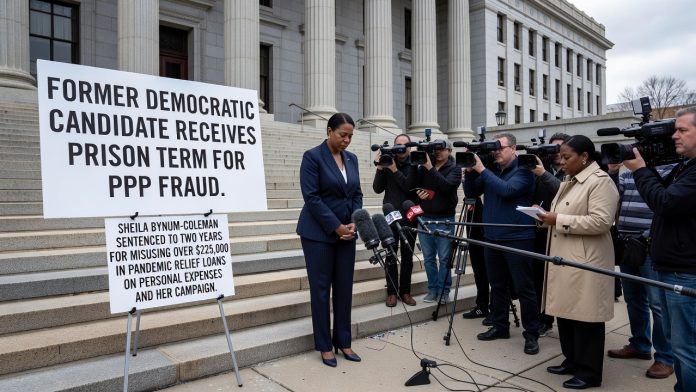
A former candidate for the Virginia House of Delegates has been sentenced to two years in federal prison after pleading guilty to charges stemming from a scheme that defrauded the government of more than $225,000 in Paycheck Protection Program loans intended for small businesses during the COVID-19 pandemic. The case highlights the misuse of taxpayer-funded relief programs by individuals in positions of public trust. Court records detail how the funds were diverted away from their intended purposes. This outcome underscores the importance of accountability in public life and the consequences of prioritizing personal gain over legal obligations.
The individual involved is Sheila Bynum-Coleman, who ran as a Democrat in the 2019 general election for House District 66 covering parts of Chesterfield County and Colonial Heights. She lost that race to Republican incumbent Kirk Cox. In early 2025 a federal grand jury indicted her along with her husband Rashad Coleman in connection with the fraud. Prosecutors described a complex operation involving multiple false statements and sham entities. The scheme demonstrated a deliberate effort to exploit emergency federal assistance programs.
The Fraudulent Scheme
Court documents reveal that the couple obtained PPP loans under false pretenses and then spent the money on personal expenses luxury items and Bynum-Coleman’s political campaign rather than supporting legitimate business payrolls. This misuse violated the core purpose of the relief program which was designed to help struggling small businesses retain workers amid widespread economic disruption. Federal authorities noted the creation of numerous fraudulent documents and bank accounts as part of the effort. Such actions erode public confidence in government assistance initiatives meant to support communities during crises.
Bynum-Coleman initially faced eleven charges but entered a plea agreement under which she admitted guilt to just two counts of making false statements on loan applications and failing to file required tax forms. The remaining charges were dismissed as part of the deal. Prosecutors had sought a sentence exceeding three years citing the scope persistence and effort invested in the misconduct. They emphasized her commitment to perpetuating the fraud through extensive paperwork and deceptive practices.
Sentencing and Restitution
On June 28 a federal judge imposed the two-year prison term followed by three years of supervised release. The court also ordered restitution totaling $120,955 to be paid to affected institutions including Virginia National Bank the Small Business Administration and the Virginia Employment Commission. This financial penalty aims to partially recover the misappropriated funds. The sentence reflects a balance between the severity of the offenses and arguments presented during the hearing.
Defense attorneys argued against any prison time claiming their client was humbled by her actions and prepared to make amends through restitution and community service. They contended that additional punishment beyond guideline calculations would amount to double jeopardy. The court ultimately determined that incarceration was warranted given the circumstances of the case.
The Appeal Process
Bynum-Coleman immediately notified the court of her intent to appeal both the conviction and the sentence. Her filing specifically alleges ineffective assistance of counsel during plea negotiations and sentencing proceedings. No further details on the appeal have been released as of the latest reports. This development leaves the final resolution of the matter pending further judicial review.
The case serves as a reminder of the strict oversight applied to federal relief programs and the legal repercussions for those who attempt to exploit them. Taxpayers expect their contributions to support genuine economic recovery efforts rather than individual enrichment. Proper enforcement of program rules helps maintain the integrity of such initiatives for future needs.