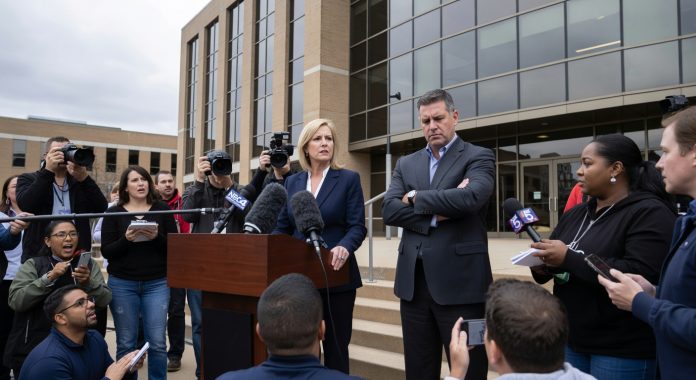
The refusal to notify ICE stems from stated concerns over legal constraints and cooperation protocols. Officials have cited various reasons for not initiating contact with federal agents even when suspects face deportation risks. These explanations have been challenged as inconsistent with existing federal requirements that allow for such notifications.
Critics argue that the positions taken by Kincaid and Descano create unnecessary barriers to enforcement actions. The process of obtaining judicial orders for information is presented as straightforward yet the officials continue to avoid direct engagement. This stance leaves local communities vulnerable to individuals who might otherwise be subject to federal oversight.
Public records and statements reveal a pattern where notification does not occur unless compelled by external means. The officials appear to rely on the absence of proactive federal requests rather than fulfilling a cooperative role. Such practices contradict the expectation that local law enforcement supports broader immigration enforcement efforts.
The legal framework permits local authorities to share information with ICE without violating state laws. Excuses centered on procedural hurdles fail to account for the voluntary nature of many notifications. Residents deserve transparency on why these opportunities are consistently declined.
Further examination shows that federal judicial processes can facilitate information sharing when local agencies choose to participate. The refusal persists despite the availability of these mechanisms. This dynamic suggests a deliberate choice to limit cooperation rather than a true legal barrier.
Community members have expressed frustration over the lack of accountability in these decisions. The officials’ responses during questioning highlighted inconsistencies in their justifications. Continued adherence to these policies risks undermining trust in local governance.
Ultimately the approach taken by Kincaid and Descano prioritizes non-engagement over public safety considerations. The possibility of routine notifications remains unaddressed in their current framework. Fairfax County residents continue to seek clarity on how these policies protect the community.
Email At:
Steve Descano – stephen.descano@fairfaxcounty.gov,
Stacey Kincaid – sheriff@fairfaxcounty.gov,