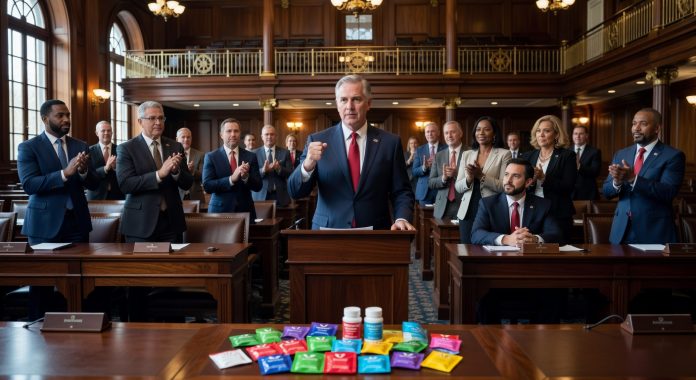
Tianeptine is a substance that mimics the effects of opioids and has been linked to severe addiction and health risks when misused. In Virginia, it has increasingly appeared in convenience stores and gas stations marketed under various names, making it easily accessible to the public including young people. SB 106 targets this availability by classifying the commercial handling of tianeptine products as a civil violation, thereby providing law enforcement and regulatory bodies with tools to curb its spread without relying solely on criminal prosecution.
The unanimous passage in the Senate underscores the priority placed on protecting communities from emerging drug threats. Proponents highlight that the bill fills a regulatory gap where tianeptine has operated in a gray area, allowing sellers to profit from a product that carries significant risks similar to controlled substances. By focusing on civil penalties, the measure aims to deter businesses from continuing to stock and sell these items while avoiding overburdening the criminal justice system.
Public safety advocates note that tianeptine abuse has contributed to increased emergency room visits and addiction treatment demands in recent years. The bill’s provisions specifically address the sale and distribution channels at retail outlets, which have become primary sources for the substance. This targeted approach is expected to reduce exposure and limit the product’s presence in everyday retail environments throughout Virginia.
The roll call vote showed support from all participating senators, including members from both major parties, demonstrating consensus on the urgency of the issue. Details from the legislative record confirm that SB 106 applies to tianeptine products and imposes penalties for selling, giving, or distributing them. This clarity helps ensure consistent enforcement across the state.
Communities in Virginia stand to benefit from reduced access to tianeptine as the legislation moves forward. The measure represents a proactive step in addressing substances that have gained popularity through unregulated sales channels. With the Senate’s approval secured, the bill now proceeds to the next stages of the legislative process.
Lawmakers emphasized the importance of safeguarding public health by regulating products that pose opioid-like dangers. The civil penalty framework allows for fines and other administrative actions against violators, creating a deterrent effect on retailers. This strategy aligns with broader efforts to combat substance abuse by limiting supply at the point of sale.
The passage of SB 106 marks a significant development in Virginia’s approach to emerging synthetic substances. By addressing tianeptine specifically, the legislation responds to patterns of abuse observed in gas stations and similar outlets. Continued monitoring and enforcement will be key to realizing the full impact of the new provisions.
Overall, the Virginia Senate’s action on this bill highlights a commitment to public safety through measured regulatory changes. The unanimous support indicates strong recognition of the need to act against gas station heroin and similar products. As the process continues, residents can anticipate stronger protections against the distribution of tianeptine.