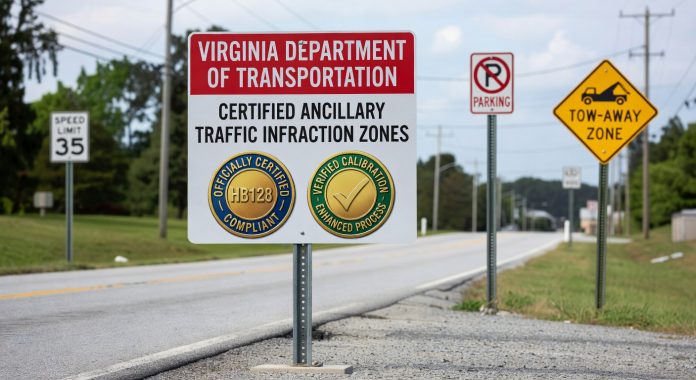
Richmond, Virginia — The 2026 session of the Virginia General Assembly has resulted in the enactment of House Bill 128, a measure designed to update the certification procedures for certain traffic-related charges when they are connected to felony cases. This legislation marks an important update to the state’s judicial code, providing courts with greater flexibility in managing interconnected legal matters.
Delegate Katrina Callsen introduced the bill, which amends key sections of the Code of Virginia, including 16.1-123.1, 16.1-241, 17.1-513, and 19.2-190.1. The primary change permits the certification of ancillary traffic infractions to the circuit court clerk when a felony is certified, contingent upon the agreement of the Commonwealth’s attorney and the individual accused. Previously, this option was restricted to ancillary misdemeanors only.
The provision addresses situations where traffic violations arise in conjunction with more serious criminal charges. By allowing these infractions to be certified alongside the felony, the bill enables a unified approach to case resolution in the higher court. This consolidation is intended to streamline the overall process, reducing the administrative burden on the judicial system.
The legislation originated as a recommendation from the Virginia Criminal Justice Conference, an organization focused on improving the administration of justice across the Commonwealth. Its endorsement reflects a thoughtful consideration of practical courtroom needs and the potential for procedural improvements.
In the House of Delegates, the bill received overwhelming support, passing on third reading with a tally of 98 to 0 on February 3, 2026. After the Senate proposed a substitute version, the House agreed to those modifications on March 12, 2026, with a vote of 97 to 0. The measure has now been signed into law and incorporated into the Acts of Assembly, with implementation expected to follow standard timelines for such statutory updates.
This update to the certification rules offers several advantages in terms of judicial efficiency. When a felony case moves to circuit court, having the ability to include related traffic infractions in the same venue avoids the necessity for parallel proceedings in district court. Such parallelism can lead to duplicated efforts, including additional filings, hearings, and resource allocation by court personnel.
By centralizing these matters, the bill helps to minimize delays that might otherwise occur when defendants and attorneys must navigate multiple court levels for charges stemming from the same set of circumstances. This can contribute to a more timely administration of justice, allowing cases to reach resolution without unnecessary fragmentation.
The consent requirement built into the new provision ensures that the certification occurs only when both the prosecuting attorney and the accused agree. This safeguard protects the interests of all involved parties and maintains the integrity of the legal process. It prevents unilateral actions and promotes collaborative decision-making in case management.
Taxpayers stand to benefit from these changes as well, as more efficient court operations can translate into better utilization of public funds allocated to the judiciary. Fewer separate proceedings mean lower overall costs associated with court administration, clerk services, and related logistical expenses.
The amendments to the specified code sections provide the necessary legal framework to support this expanded certification authority. They integrate the new capability into existing jurisdictional and procedural guidelines, ensuring seamless incorporation into current practices.
Virginia courts handle a significant volume of cases each year, and measures like House Bill 128 equip them with tools to manage caseloads more effectively. The focus on ancillary traffic infractions specifically targets a common type of related charge that often accompanies more serious offenses, such as those involving vehicle operation during criminal activity.
As the bill becomes operational, it is anticipated to foster improved coordination between the various levels of the state’s court system. District courts can focus more exclusively on standalone matters, while circuit courts gain the option to address comprehensive case packages when appropriate and consented to.
The near-unanimous passage in both chambers underscores the broad recognition of the bill’s merits in enhancing procedural fairness and operational effectiveness. Lawmakers prioritized this reform as part of their efforts to maintain a strong and responsive legal system in Virginia.
In summary, House Bill 128 represents a constructive advancement in Virginia’s legislative agenda for the 2026 session. It builds upon existing law to provide a practical solution for handling traffic infractions that are ancillary to felony prosecutions, promoting efficiency, resource conservation, and a cohesive approach to justice delivery.