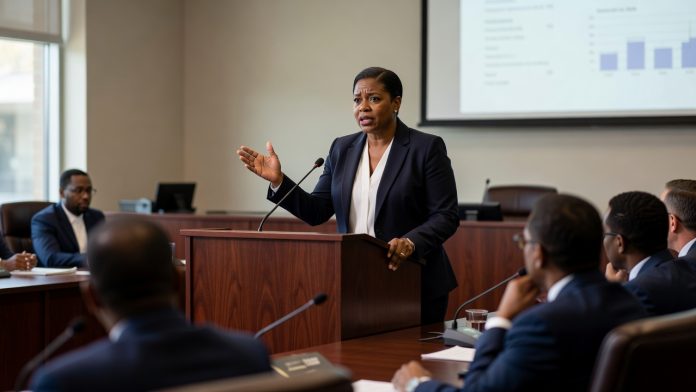
Anderson explained that the carryover fund holds resources accumulated over multiple years for specific projects. She noted that last year’s information technology allocation stood at 173 million dollars. The fund serves as a reserve for multi-year commitments that occur in the budget cycle.
Understanding the Carryover Fund Mechanics
The explanation provided by Anderson clarified that these dollars sit in the fund specifically for uses such as devices or textbooks. Board discussions revealed questions about why textbook access faces reductions even with the large surplus in place. Anderson pointed out the contrast between available resources and current material allocations.
This situation raises concerns about how effectively public education dollars support core classroom needs. Conservative principles emphasize responsible stewardship of taxpayer funds and avoiding unnecessary accumulation of unspent reserves. Efficient allocation would prioritize direct student resources over prolonged holding of large sums.
Prioritizing Student Resources Over Accumulation
Anderson’s presentation underscored that the carryover exists for either devices or textbooks when needs arise. The board must consider whether current policies align with delivering essential learning materials without delay. Fiscal conservatives advocate for transparent processes that direct funds promptly to classrooms rather than allowing them to remain idle.
Such practices align with values of limited government intervention and maximum return on public investment. The $166 million figure represents an opportunity to enhance educational outcomes through timely expenditures. Anderson’s comments invite further review of budget implementation to ensure alignment with student success goals.
Call for Greater Oversight in Education Spending
The Fairfax County School Board continues its deliberations following Anderson’s detailed account of the fund. Her focus on the contrast between the carryover amount and textbook reductions highlights a key area for examination. Conservative viewpoints stress the importance of accountability measures that prevent waste and promote practical use of resources.
By keeping the fund for multi-year projects the system maintains flexibility but risks delaying essential purchases. Anderson’s remarks serve as a reminder that public funds should support immediate educational requirements. This approach supports broader goals of fiscal prudence and effective service delivery in local government.
To Contact Fairfax School Board Members:
All Members – FairfaxCountySchoolBoard@fcps.edu,
Tom Dannan – tfdannan@fcps.edu,
Robyn Lady – ralady1@fcps.edu,
Marcia St. John-Cunning – mstjohncunni@fcps.edu,
Melanie Meren – HunterMillStaff@fcps.edu,
Ricardy Anderson – randerson@fcps.edu,
Mateo Dunne – mdunne@fcps.edu,
Karl Frisch – kfrisch@fcps.edu,
Sandy Anderson – sanderson@fcps.edu,
Seema Dixit – sdixit@fcps.edu,
Kyle McDaniel – kmcdaniel@fcps.edu,
Ryan McElveen – rlmcelveen@fcps.edu,
Ilryong Moon – imoon@fcps.edu,