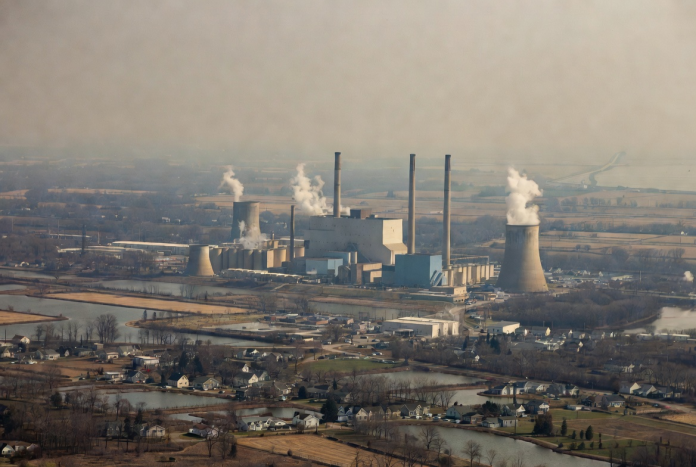
Industrial facilities, particularly paper mills, specialty chemical plants, and poultry operations, continue to account for the largest permitted groundwater withdrawals across Virginia’s Coastal Plain east of Interstate 95. Five of the top users alone exert enough influence to shape regional water levels, according to a comprehensive state study released in 2026. These concentrated industrial demands place sustained pressure on the aquifers that supply households and communities throughout the region.
The Virginia Department of Environmental Quality examined reported and estimated withdrawals in the Eastern Virginia and Eastern Shore Groundwater Management Areas. Industrial users represent approximately 35 percent of the total, the single largest category. Private domestic wells account for 34 percent and public water supply for 26 percent. Among the highest-volume permitted facilities, paper production, specialty chemicals, and poultry processing stand out as established industries whose combined withdrawals continue to influence hydraulic conditions across wide areas.
Concentrated Industrial Demand and Regional Effects
Paper mills near Franklin and West Point have long ranked among the heaviest users. Their historical and ongoing extractions helped drive inland water levels below sea level and reverse natural flow patterns, with groundwater now moving inward and downward toward industrial centers. The same pressure reductions contribute to aquifer compaction, measurable land subsidence, and conditions that favor localized increases in chloride. When five facilities can shape water levels across the broader system, the cumulative effect extends far beyond the immediate vicinity of the plants.
Private domestic wells remain largely unpermitted and continue to grow with population. Families who rely on these wells or on public systems that draw from the same aquifers confront the consequences of industrial dominance in the form of lower water levels, potential quality degradation, and reduced long-term reliability. The moral duty to protect household water security requires that public policy prevent a small number of industrial operators from dictating the condition of a shared resource essential to daily life.
Policy Choices and Leadership Accountability
The Ground Water Management Act of 1992 established permitting thresholds within designated management areas, yet the study describes its overall results as mixed. Regional levels experienced a temporary rebound and period of stabilization after the 2010 closure of a major mill, but those gains stalled around 2021. Signs of renewed decline have appeared, and the concentrated industrial withdrawals continue to set the dominant hydraulic signal. Democratic leadership under Governor Abigail Spanberger currently holds the executive authority that reviewed the full report prior to its release. Stronger earlier constraints on the scale of the largest industrial users could have limited the extent of the regional influence now documented.
Conservative values place the protection of families, the integrity of natural resources, and intergenerational stewardship at the center of governance. Water is not a commodity to be allocated first to the highest-volume industrial applicants. When five facilities can shape water levels across large portions of the Coastal Plain, ordinary citizens who lack comparable political or economic leverage face the downstream effects in their homes and communities. Observation wells across the network of more than 440 sites track these changes, yet monitoring cannot redistribute the underlying demand.
Restoring Balance for Household Security
The report recommends clearer statutory authority for regulators to deny or reduce permits when alternative sources such as surface water or reuse are reasonably available. It also suggests requiring local comprehensive plans in groundwater management areas to account for limited supplies. These measures would help prevent further concentration of withdrawals among a small number of industrial users and reduce the pressure on aquifers that serve residential needs.
Industrial facilities in the paper, chemical, and poultry sectors continue to dominate permitted groundwater use in the Coastal Plain. Five of the top users alone influence regional water levels in ways that affect families living far from the plant gates. Responsible governance requires acknowledging the science, enforcing limits that protect household supplies, and ensuring that industrial concentration no longer determines the long-term condition of the aquifers that sustain Virginia communities. The evidence of industrial dominance is clear. The duty to protect families and the water they depend upon remains.