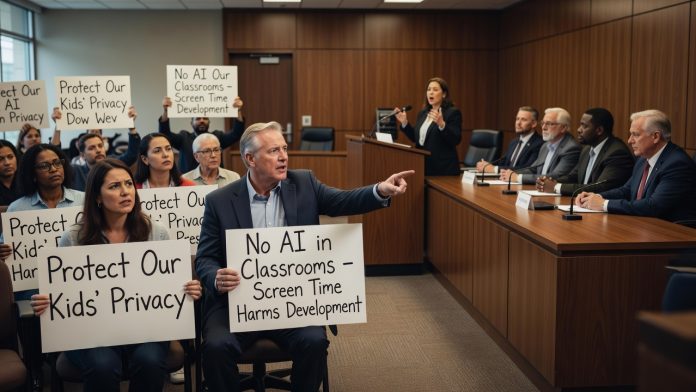
They highlighted multiple risks including unauthorized data collection from students and excessive screen exposure that could hinder natural learning processes.
The speakers emphasized the need for robust age verification measures to ensure educational technologies align with student maturity levels.
Fairfax County School Board members listened as community members presented evidence of how generative AI could lead to unintended surveillance of young learners.
These warnings come amid growing national discussions about technology in education and its long-term effects on child welfare.
Protecting Student Privacy in the Digital Age
Data privacy emerged as a central theme during the public comments portion of the meeting.
Parents argued that AI systems often require vast amounts of personal information which could be vulnerable to breaches or misuse by third parties.
They called for stricter policies to limit what data schools share with technology providers.
Community members stressed that without proper safeguards students face ongoing monitoring that invades family privacy rights.
The discussion underscored the importance of transparency in how educational platforms handle sensitive information.
Addressing Excessive Screen Time Concerns
Another key issue raised involved the amount of time children spend interacting with screens in AI-driven learning environments.
Parents noted that increased reliance on digital tools reduces opportunities for hands-on activities and social interaction essential for development.
They urged the board to consider limits on daily screen exposure to promote balanced educational experiences.
Speakers referenced how young children in particular may struggle to focus when constantly engaged with interactive AI features.
The board was encouraged to prioritize traditional teaching methods alongside any new technology introductions.
Implementing Age Verification for Student Safety
Parents advocated for mandatory age verification protocols before students access AI-powered educational software.
This measure they explained would prevent inappropriate content exposure and ensure tools match developmental stages.
The proposal aims to create safer online learning spaces tailored to individual grade levels.
Community input highlighted past incidents where unverified access led to unintended distractions during class time.
Board members received detailed suggestions on how to integrate such checks into existing school systems.
Moving Forward with Responsible Technology Policies
The meeting concluded with calls for the Fairfax County School Board to delay AI adoption until comprehensive reviews are completed.
Parents expressed hope that their input would lead to policies that prioritize child safety above technological advancement.
Ongoing community engagement was encouraged to monitor future implementations.
These discussions reflect broader efforts in Virginia to balance innovation with protective measures in public education.
To Contact Fairfax School Board Members:
All Members – FairfaxCountySchoolBoard@fcps.edu,
Tom Dannan – tfdannan@fcps.edu,
Robyn Lady – ralady1@fcps.edu,
Marcia St. John-Cunning – mstjohncunni@fcps.edu,
Melanie Meren – HunterMillStaff@fcps.edu,
Ricardy Anderson – randerson@fcps.edu,
Mateo Dunne – mdunne@fcps.edu,
Karl Frisch – kfrisch@fcps.edu,
Sandy Anderson – sanderson@fcps.edu,
Seema Dixit – sdixit@fcps.edu,
Kyle McDaniel – kmcdaniel@fcps.edu,
Ryan McElveen – rlmcelveen@fcps.edu,
Ilryong Moon – imoon@fcps.edu,