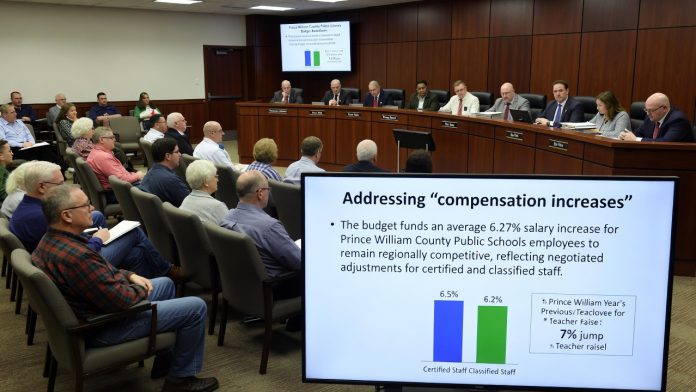
Prince William County taxpayers are facing the financial burden of a massive new spending package directed toward the public school system. The recently proposed budget includes a historic $1.1 billion transfer to Prince William County Public Schools, representing a massive $123.8 million increase over the previous fiscal year. This 12.5 percent jump in county funding pushes the total school budget to an astounding $2.9 billion. Local conservatives are raising alarms about the sustainability of such aggressive spending hikes and the resulting burden placed on hardworking taxpayers.
The Prince William County Board of County Supervisors, which includes Deshundra Jefferson, Victor Angry, Andrea Bailey, Kenny Boddye, Margaret Franklin, Tom Smith, Yesli Vega, and Bob Weir, plays a central role in approving these massive county transfers. The decisions made by these elected officials directly impact the wallets of every resident in the county. Approving such a drastic 12.5 percent increase in a single year raises serious questions about fiscal responsibility and the prioritization of essential services versus bureaucratic expansion. The continuous cycle of increasing budgets demands a closer look at where these taxpayer funds are actually going. Taxpayers are left wondering if the board is doing enough to eliminate waste and protect the community from excessive taxation.
Soaring Compensation and Bureaucratic Growth
A significant portion of this ballooning budget is dedicated to a new round of sweeping compensation increases for school employees. The budget dictates an average 6.27 percent salary hike across the board, with certified staff receiving a 6.5 percent bump and classified staff getting a 6.2 percent increase. This comes immediately on the heels of a massive 7 percent pay raise granted to teachers in the previous fiscal year. While proponents argue this is necessary to remain regionally competitive, fiscal conservatives point out that compounding such large annual increases creates an unsustainable baseline for future county budgets. Taxpayers are essentially being asked to fund a rapidly expanding payroll without corresponding measures to streamline operations or cut administrative bloat.
Beyond the substantial pay raises, the $2.9 billion school budget funds a variety of new and expanding programs that extend far beyond traditional educational mandates. The spending plan includes the initial rollout of Universal Pre-K, a costly initiative that significantly expands the footprint of the public school system. Additional funds are being funneled into school-based food pantries, mobile health clinics, and a student and family workforce readiness initiative. While these programs may have noble intentions, they represent a clear expansion of the school system into social services, an area traditionally managed by other county or state agencies. Critics argue that this mission creep distracts from core educational goals and further strains the already heavily burdened county taxpayers.
Officials defending the budget have been quick to praise the massive influx of taxpayer dollars. Occoquan District Supervisor Kenny Boddye stated that the adjustments will enable the county to transfer a historic $1.1 billion to the school system, which he claims will help maintain graduation rates and fund the teacher pay raises. School Board Chairman Babur Lateef also expressed excitement over the funding of their new strategic plan, specifically celebrating the beginnings of universal pre-K and additional classroom supports. The official budget message echoed these sentiments, declaring that strengthening the workforce through the 6.27 percent pay increase is a critical priority for regional competitiveness. However, these justifications offer little comfort to fiscal conservatives who see a pattern of unchecked spending and a lack of focus on basic financial discipline.
Strategic Plans and Long-Term Fiscal Threats
The current budget bridges the gap between the school system’s previous strategic plan and the newly minted Elevate 2030 initiative. This transition involves hiring 59 new full-time teaching assistants for special education, alongside continued funding for summer school support programs. Every new hire and program expansion adds permanent liabilities to the county ledger, driving up pension costs and future compensation requirements. Conservatives argue that before embarking on a new decade of expanded strategic goals, the school board must conduct a thorough audit to identify and eliminate wasteful spending. Without a commitment to reducing the budget and saving taxpayer money, these ambitious long-term plans threaten to continuously drive up local tax rates.
As Prince William County moves forward with this $2.9 billion educational spending package, the need for rigorous financial oversight has never been more apparent. The staggering $123.8 million increase in the county transfer highlights a troubling trend of relying on endless revenue growth rather than finding internal efficiencies. Hardworking families cannot be expected to function as a limitless funding source for expanding government programs and compounding public sector raises. It is imperative that local officials prioritize fiscal restraint, eliminate redundant social programs within the schools, and respect the financial limits of the taxpayers they serve. Only through strict budget management can the county ensure educational quality without sacrificing the economic well-being of its residents.
Email the Board of Supervisors At:
Chair At-Large (Deshundra Jefferson) – djefferson@pwcgov.org,
Brentsville (Tom Gordy): tgordy@pwcgov.org,
Coles (Yesli Vega): yvega@pwcgov.org,
Occoquan (Kenny Boddye): kboddye@pwcgov.org,
Potomac (Andrea Bailey): abailey@pwcgov.org,
Woodbridge (Jeannie LaCroix): jlacroix@pwcgov.org,
General Board: bocs@pwcgov.org,