Fantasy sports, legalized under the 2016 Fantasy Contests Act, have operated with minimal state oversight for nearly a decade. Operators currently register but pay no specific state tax on their earnings from contests like fantasy football. HB145 aims to close perceived loopholes by placing full regulatory authority under the Virginia Lottery, which would gain powers for rulemaking, investigations, and enforcement. This includes requirements for operators to obtain permits before offering contests in the state, alongside enhanced consumer protections.
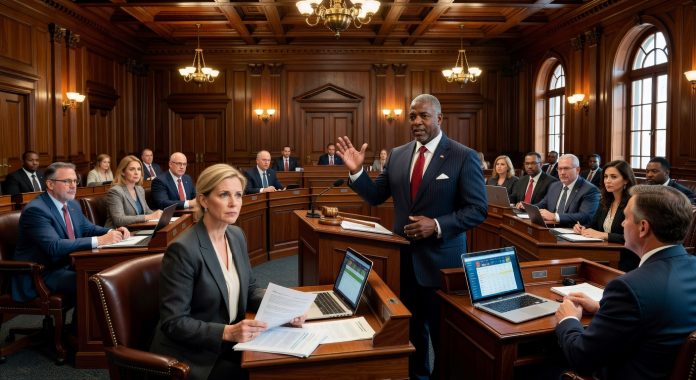
Delegate Krizek, speaking before the subcommittee, emphasized the distinctions between fantasy sports and traditional sports betting. He noted that fantasy contests reward skill in player selection and strategy over mere chance, setting them apart from wagering on game outcomes. The bill’s 10 percent levy on operator revenues, he argued, remains competitive and low compared to taxes on other gaming sectors, potentially generating new state funds estimated in the millions without directly taxing individual players.
From a fiscal conservative standpoint, this approach merits consideration. Virginia faces budget pressures, and tapping into an established industry like daily fantasy sports could provide revenue for essential services without raising income or sales taxes on hardworking families. The unanimous subcommittee vote, crossing party lines, suggests broad agreement that some structure is needed after years of light-touch regulation. Moreover, subjecting operators to Lottery oversight could ensure fair play, preventing exploitation while preserving consumer choice.
Yet, questions linger about government expansion into private enterprise. Republicans have long championed limited intervention, arguing that markets self-regulate effectively. Critics worry that added bureaucracy, even with a low tax, could drive operators offshore or increase costs passed to users, stifling innovation in a skill-based pastime enjoyed by millions. Virginia’s recent legalization of sports betting already generates substantial tax dollars; layering regulations on fantasy sports risks blurring lines conservatives prefer kept distinct.
The bill revises the 2016 act to mandate stricter compliance, including data reporting and age verification, addressing concerns over underage participation and addiction risks. Krizek highlighted that Virginia’s framework would remain operator-friendly, with the tax rate lower than many neighboring states’ gaming impositions. If enacted by July 1, 2026, it could set a model for balancing revenue generation with personal freedom.
Supporters point to the industry’s growth since 2016, when fantasy sports gained explicit legal footing amid federal uncertainty. Operators like DraftKings and FanDuel have thrived, but without dedicated taxation, the state misses an opportunity to fund education, infrastructure, and public safety. A companion Senate Bill 129, initially introduced by Senator Adam Ebbin, underscores bipartisan interest in clarifying the ‘fuzzy line’ between fantasy and betting.
As HB145 heads to the House Appropriations Committee, stakeholders watch closely. Republicans advocate scrutinizing projected revenues—potentially $30,000 initially or more—and ensuring no unintended burdens on Virginia’s economy. The measure aligns with principles of responsible governance: low taxes, clear rules, and protection for citizens without overreach. In an era of fiscal restraint, Virginia lawmakers have a chance to demonstrate that targeted taxation can support the Commonwealth without expanding the nanny state.
This development reflects broader national trends where states seek sustainable gaming revenues post-PASPA repeal. Virginia’s cautious approach, if passed, could exemplify conservative values: pro-business, pro-family, and pro-fiscal health.
Source: Field reports and eyewitness accounts.