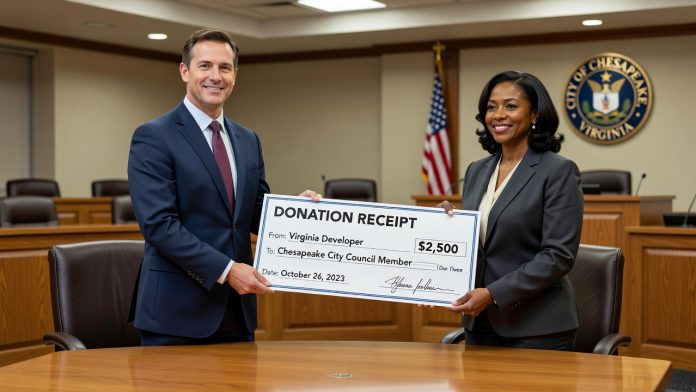
Taylor Grissom, a real estate developer based in Virginia Beach and president of Prempay Development LLC, contributed $2,500 on April 17, 2026, to Friends of Jeff Jefferies, the campaign committee supporting the Chesapeake City Council member. Grissom’s professional background centers on real estate development in the Hampton Roads region. This recent contribution adds to his pattern of political giving within Virginia. Public records show Grissom previously directed funds to Mike Lamonea for Delegate, a candidate in a state legislative race.
The April donation specifically benefits Jeff Jefferies, who was appointed to the Chesapeake City Council in September 2025 after serving more than 24 years with the Chesapeake Police Department. Prior to the appointment, Jefferies had run as a candidate for the council in the November 2024 general election. As an elected official on the nine-member body, Jefferies participates in decisions affecting local governance, including matters of public safety, development approvals, budgeting, and regulatory policies in Chesapeake. Conservatives and Republicans have frequently expressed frustration with city council actions that expand government oversight on land use, increase spending on certain programs, or advance policies perceived as prioritizing progressive priorities over fiscal restraint and individual property rights.
By directing resources to support Jefferies through this contribution, Grissom aligns himself with an official whose council tenure involves navigating and voting on these types of issues. Donors who provide financial backing to such officials potentially endorse or enable the continuation of stances that clash with core conservative principles, such as limited government intervention and lower tax burdens. Grissom’s choice to allocate $2,500 in this manner stands in contrast to his support for Lamonea, highlighting a mixed approach to political involvement across party lines and candidate types. In Virginia’s political landscape, where local elections and appointments shape community outcomes on housing, infrastructure, and economic growth, contributions like this one draw attention to the influence of developers in sustaining officials amid ongoing debates over regulatory environments. Observers note that sustained financial support from the business community can influence the direction of council priorities, particularly in a city experiencing population and development pressures.
Grissom’s donation occurs at a time when Chesapeake continues to address challenges related to public services and land management, areas where council votes carry direct consequences for residents and businesses alike. The timing and recipient of the contribution underscore the role of individual donors in bolstering specific elected figures whose records on key local matters have prompted criticism from those advocating for more conservative approaches to governance. This pattern of giving illustrates how financial resources flow to officials whose positions on city policies may not always align with Republican emphases on reducing bureaucracy and promoting free-market solutions.