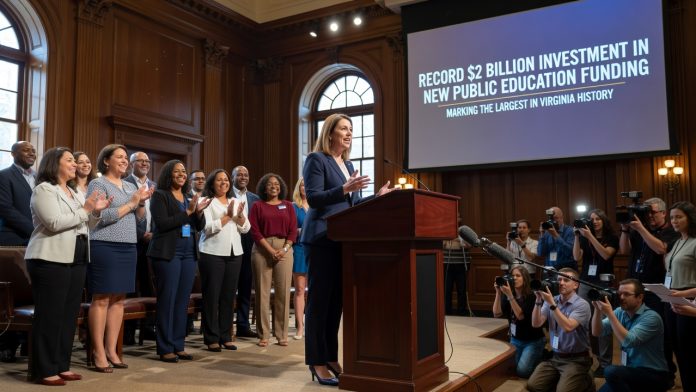
Virginia has officially enacted a new state budget that includes a historic and unprecedented $2 billion investment in public education funding. Governor Abigail Spanberger recently announced the enactment of this massive spending plan, which marks the largest single allocation toward K-12 schools in the history of the Commonwealth. While the administration celebrates this record-breaking financial commitment, fiscal watchdogs are closely analyzing the long-term economic impact of such expansive state spending. The budget also introduces controversial new taxation mechanisms and allocates hundreds of millions of taxpayer dollars toward localized social programs.
The cornerstone of this newly enacted fiscal plan is the monumental $2 billion injection into Virginia public schools. A significant portion of this funding is dedicated to providing a four percent salary increase for public school teachers across the state. While compensating effective educators remains a priority for many citizens, there is a strong demand for accompanying accountability measures tied to this historic funding. Taxpayers expect that this massive influx of education funding will yield tangible improvements in student performance rather than simply expanding bureaucratic administration within local school districts.
New Taxation and Business Concerns
To help finance these sweeping budget initiatives, the state government has implemented a first-of-its-kind statewide energy consumption tax specifically targeting data centers. Governor Abigail Spanberger stated that this new revenue mechanism ensures data centers pay their fair share for the massive amounts of energy they consume on a daily basis. However, business leaders and economic analysts warn that targeting specific industries with novel taxes could severely damage Virginia’s reputation as a business-friendly environment. The Commonwealth has long been a global hub for the technology sector, and newly imposed tax burdens risk driving future infrastructure investments to neighboring states with more competitive tax policies.
Beyond education and technology taxes, the budget deliberately sets aside $1 billion intended to shield Virginians from anticipated federal funding reductions. Governor Abigail Spanberger framed this massive defensive allocation as necessary to contend with what she described as President Trump’s disastrous cuts to healthcare. Republican lawmakers often view federal spending reductions as a necessary step toward balancing the national budget and curbing rampant inflation. By backfilling these federal reductions with state dollars, Virginia risks creating an unsustainable baseline for future budgets that will rely heavily on continuous tax revenue growth.
Expansion of State-Funded Social Programs
The newly enacted budget also dedicates hundreds of millions of taxpayer dollars to heavily subsidize the costs of childcare, housing, and healthcare. This includes a specific allocation of more than $100 million aimed at making housing more affordable and attempting to lower energy costs for residents. This landmark funding for childcare represents a significant shift from previous years, where state budgets provided minimal direct intervention in the private childcare market. Free-market advocates express concern that heavily subsidizing these sectors with public funds often distorts market prices and ultimately fails to resolve the underlying supply issues driving up costs.
In defending the sprawling financial package, Governor Abigail Spanberger characterized the budget as a responsible path forward for the future of the Commonwealth. She claimed the state’s financial strategy reflects a shared commitment to expanding economic opportunity while addressing an affordability crisis allegedly created by reckless policies out of Washington. Critics argue that shifting blame to federal policies serves as a convenient political shield for expanding the size and scope of state government operations. True economic opportunity is traditionally fostered through lower taxes and deregulation rather than massive government spending programs and newly invented industry taxes.
As this historic budget takes effect, the citizens of Virginia will bear the financial responsibility of sustaining these record-breaking spending levels for years to come. The $2 billion public education investment undoubtedly provides immediate financial relief to school districts, but it simultaneously raises expectations for measurable academic success in the classroom. Lawmakers must now ensure strict oversight of these funds to prevent bureaucratic waste and protect the hard-earned money of Virginia taxpayers. Ultimately, the long-term success of this budget will depend on whether the Commonwealth can maintain its economic vitality despite the imposition of targeted new taxes and vastly expanded government obligations.