
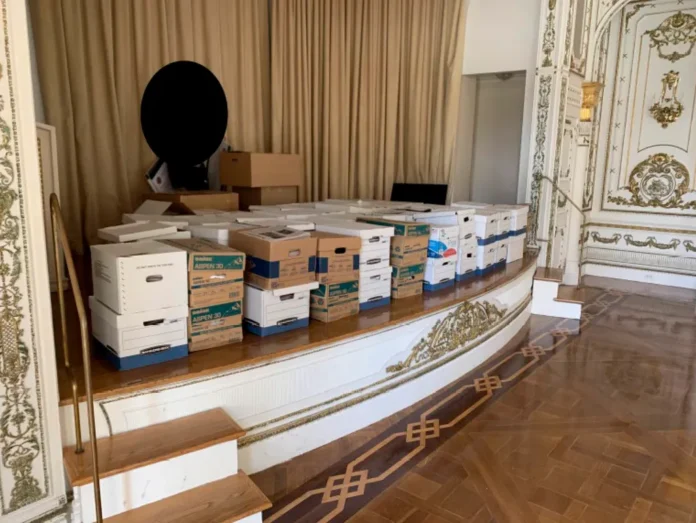
According to declassified emails released by Senate Judiciary Committee Chair Chuck Grassley on Tuesday, the FBI during the Biden administration questioned if it had established probable grounds to search President Donald Trump’s Mar-a-Lago home in 2022. However, the raid was carried out anyway due to pressure from senior Justice Department officers.
The emailed communication that Grassley’s office received from FBI and DOJ shows that agents did not think the legal standard of a search warrant was met in the months prior to the raid but were overruled during President Joe Biden’s tenure in office.
The FBI & DOJ released shocking documents 2 days ago showing that the FBI did not believe it had probable cause to raid Pres. Trump’s Mar-a-Lago residence, but Biden DOJ pushed through with it.
According to the records, Mar-a-Lago’s raid was a miscarriage justice
Read for urself: https://t.co/qbJNT0tcRE pic.twitter.com/ljWdjndhHE
Chuck Grassley is on Twitter (@ChuckGrassley).
December 16, 2025
Grassley posted on X that he had received “shocking new documents” from the DOJ & FBI today showing FBI DID not believe it had probable cause to raid Pres Trump’s Mar-a-Lago but Biden DOJ pushed through with it. According to the records, the Mar-a-Lago home raid was a miscarriage.
Records contained emails between FBI agents, DOJ attorneys and DOJ officials from June 2022 until the last days before the raid on August 8, 2022. FBI officials repeatedly expressed concerns about the warrant’s evidentiary base, which they deemed to be thin, uncorroborated or outdated. DOJ officials ignored these warnings and determined that the probable cause threshold was met. They pursued an extensive warrant, which covered the former president’s Palm Beach property, including his residence, office and storage area.
In an email, an FBI official who was an assistant special agents in charge stated that “very little information has been developed” about the possible culpability of those responsible for the mishandling of documents. The official stated that the information suggesting there were additional boxes of documents at Mar-a-Lago came from a “single-source,” was “not corroborated,” as well as being “possibly outdated.”
The official did note that DOJ lawyers believed the draft warrants met probable cause standards. FBI personnel continued their push for a more non-confrontational approach. They recommended that investigators notify Trump’s lawyers that a search warrant was in preparation and ask them to comply voluntarily, something that Trump’s legal team had already done.
The official stated that “even as we continue on the path to a search warrant… a reasonable discussion with the former President’s Attorney… should not be discounted.” He added that documents could still be obtained while classification questions are resolved.
The FBI became increasingly frustrated as the weeks went by. Another email complained that investigators were asked to revise drafts of affidavits without any new facts.
The agent wrote: “We’ve not generated any new facts but we keep getting drafts after drafts after drafts.” When is it appropriate to submit this if there hasn’t been a recent witness who can provide information on classified [materials] at the site?
A second internal message said that the FBI Washington Field Office “did not believe… that we had established probable cause” for the search warrant at Mar-a-Lago for classified documents, even though DOJ officials insisted otherwise.
The DOJ presented the application for a search warrant to a federal judge in the Southern District of Florida who, despite the objections raised, approved it on August 5, 2022 after finding probable causes. The search warrant allowed agents to search large areas of Trump’s Mar-a-Lago estate, including his home, office and storage space, for classified documents and other government material.
Merrick Garland was appointed by Biden as the then-attorney general. He confirmed later that he had personally approved the decision for the warrant to be issued and publicly defended the process in rare comments days after the raid. Garland stated that the search was “authorized by the federal court on the basis of the required finding” and stressed the importance of such decisions.
In emails, FBI agents warned that a raid was likely to be “counterproductive”. They also suggested “alternatives less intrusive options and quicker methods” for recovering any remaining records. These recommendations were rejected.
Early August 2022 saw the start of planning the execution of the search warrant. In a message from Aug. 4, an FBI Agent stressed the Bureau’s desire to conduct this search in a professional, low-key manner and to “be mindful of the optics.”
The message referred to a meeting between senior DOJ officials, in which George Toscas, then Deputy Assistant Attorney-General was quoted saying that he “frankly does not give a damn” about the optics of the search. The agent warned the DOJ that contact with Trump’s lawyers immediately before the raid would not go well and could inflame tensions.
The agent said, “I know that this request might not go well with DOJ. However, it’s the FBI that will serve and execute the search, and our personnel will have to deal the reaction to the first contact.”
The raid took place on August 8, 2022. A FBI operation order allowed agents to use deadly force and carry firearms if needed. Agents were told to carry standard issue weapons, ammunition and handcuffs. They also had to wear unmarked clothing while concealing any law enforcement equipment.
During the search agents confiscated boxes of documents, which Trump’s lawyers later claimed contained materials protected by attorney client and executive privilege. Trump’s lawyers complained that they were not allowed to observe the search, and expressed concerns over the use of an ‘filter team.
Trump challenged the warrant later in court. In an order dated June 27, last year, U.S. district judge Aileen Cannon, who was appointed by Trump, found that Trump had not met, the legal standard needed to overturn the finding of probable causes.
Cannon wrote that “Defendant Trump had not made the required’substantial preliminaries’ to warrant a Franks Hearing.” Cannon wrote that “Defendant Trump has not made the required’substantial preliminary showing’ to warrant a Franks hearing.”
Cannon’s decision left the warrant intact, even though she later dismissed classified-documents prosecutions in July on different constitutional grounds related the former special counsel Jack Smith’s appointment.
Trump pleaded no contest to all 37 counts of felony charges in Smith’s case. These included false statements and conspiracy to obstruct the justice. In the summer of 2016, he was charged with three more counts in a superseding investigation indictment that included his assistant Walt Nauta and his property manager Carlos De Oliveira.
Smith is preparing to appear before the House Judiciary Committee for a deposition this week.
Below you can read the declassified communication between FBI and DOJ personnel.
NEWSLETTER SIGNUP
Subscribe to our newsletter! Get updates on all the latest news in Virginia.