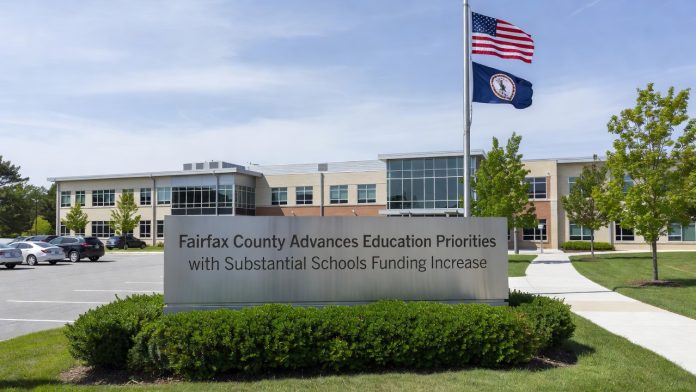
Fairfax County officials have approved the fiscal year 2026 budget that allocates 3.05 billion dollars to Fairfax County Public Schools representing a 5.2 percent increase from the prior year. This funding level positions the school system as the dominant recipient of county resources and accounts for 59.6 percent of the overall 5.12 billion dollar adopted budget. The decision maintains the real estate tax rate at 1.095 dollars per 100 dollars of assessed value allowing rising property assessments to generate the necessary revenue. County leaders view the allocation as a measured response to documented pressures on salaries benefits and operational expenses within one of Virginia’s largest school districts.
Budget Allocation Details
The general fund stands at approximately 2.48 billion dollars and directs the largest share of its resources toward the schools transfer. This structure underscores the county’s commitment to education as the foundation for long term community stability and workforce development. Other functional areas including public safety and affordable housing receive incremental support yet at lower percentage growth rates than the schools allocation. The unchanged tax rate shifts the revenue burden onto assessment growth rather than new rate increases preserving fiscal predictability for property owners.
Compensation adjustments appear across multiple agencies yet remain secondary in scale to the schools transfer. Multi year planning projections within the adopted document extend to fiscal year 2027 and signal continued upward pressure on personnel and operational costs. These projections indicate that the current funding trajectory may need to recur or accelerate without future policy adjustments. The 5.2 percent increase exceeds recent general inflation trends and aligns with documented needs for competitive salaries and enrollment related expenses.
Taxpayer and Resource Considerations
Property owners across Fairfax County will experience higher individual tax bills due to rising assessments even as the nominal rate stays constant. This mechanism effectively finances the schools increase through existing structures without requiring an explicit rate change. County residents benefit from the predictability of a steady rate while the schools system gains resources to address compensation and capital needs. The approach reflects a preference for measured revenue growth tied to market conditions rather than direct tax policy shifts.
Larger percentage growth for Fairfax County Public Schools reduces relative headroom for expansions in public safety or housing initiatives within the fixed general fund. This trade off highlights the priority placed on education as a core investment that supports family structures and future economic productivity. Long term planning documents flag ongoing cost pressures suggesting sustained attention to school funding will remain necessary. Officials emphasize that the allocation represents a deliberate policy choice focused on maintaining service levels amid rising expenses.
Long Term Planning Outlook
The fiscal year 2026 adopted budget supplies headline totals and the confirmed 5.2 percent schools increase without embedding detailed line item breakdowns of enrollment or salary schedules. Preliminary multi year estimates point to continued demands on personnel and operational budgets into the following fiscal year. These estimates reinforce the importance of disciplined oversight to ensure resources translate into measurable educational outcomes. The scale of the 3.05 billion dollar commitment underscores education as the county’s single largest functional priority.
Fairfax County Public Schools operates as one of Virginia’s largest districts and the funding level supports operations compensation and capital requirements across numerous facilities. The increase positions the system to respond to documented cost pressures while maintaining service continuity for students and families. County leaders present the allocation as consistent with broader goals of fiscal responsibility paired with essential public investments. Projections within the document indicate that similar funding patterns may persist absent adjustments in spending priorities or revenue policies.
The adopted plan treats the schools increase as a central element of the overall budget strategy. This approach balances the need for educational resources with the maintenance of a constant real estate tax rate. Ongoing monitoring of assessment trends and expenditure growth will shape future decisions. The resulting framework supports community stability by directing substantial resources toward the development of the next generation.
To Contact Fairfax School Board Members:
All Members – FairfaxCountySchoolBoard@fcps.edu,
Tom Dannan – tfdannan@fcps.edu,
Robyn Lady – ralady1@fcps.edu,
Marcia St. John-Cunning – mstjohncunni@fcps.edu,
Melanie Meren – HunterMillStaff@fcps.edu,
Ricardy Anderson – randerson@fcps.edu,
Mateo Dunne – mdunne@fcps.edu,
Karl Frisch – kfrisch@fcps.edu,
Sandy Anderson – sanderson@fcps.edu,
Seema Dixit – sdixit@fcps.edu,
Kyle McDaniel – kmcdaniel@fcps.edu,
Ryan McElveen – rlmcelveen@fcps.edu,
Ilryong Moon – imoon@fcps.edu,