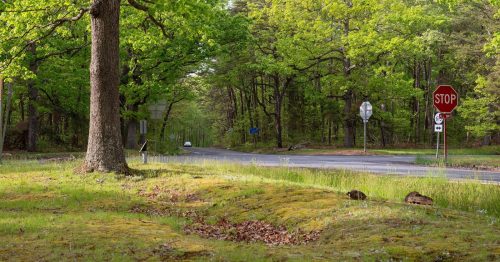
While Virginia celebrates its 250th anniversary of independence, we should also honor another anniversary: The Wilderness Campaign.
by Shaun Kenney
They came to a crossing in the track leading out of The Wilderness’ easternmost reaches. If they turned right, they would be heading north. If they turned left, it meant that they were heading north. From their throats erupted a mighty shout of joy. In the dust and darkness, they experienced what they would later describe as a rebirth as men and an army. Ulysses S. Grant came through their ranks, and they shouted and waved hats for him .”
— Gene Smith “Lee and Grant”, p.
Although I don’t know why Virginia 250 has sputtered, I am shocked that Virginia doesn’t do anything to promote and celebrate the founding of America.
It is not necessary to say it too formally, but America was a Virginian concept, created and fought for by Virginians. Virginians – Jefferson, George Mason, George Wythe, among others – articulated the reasons for separation from Great Britain. The American War for Independence ended at Yorktown. Virginians under James Madison forged and ratified the U.S. Constitution.
It is not disputed that the two words that bind the United States are Liberty and Union. “Liberty and Union Now and Forever! One and Inseparable!” was Senator Daniel Webster’s response to South Carolina’s John Calhoun, when the issue of nullification – an idea that Jefferson and Madison had floated in the Virginia and Kentucky Resolves – hung over the debate about states’ rights and federal power. Andrew Jackson threatened the call-up of troops, and South Carolina submitted for a while to the Union.
This time would end with a rupture in December 1860, when South Carolina – too large to be a state of mind and too small to be regarded as a republic – finally declared its secession. Virginia initially refused to join slaveholding states. But when Lincoln ordered 90,000 soldiers to suppress the rebellion, Virginia joined and her leadership class, including General Robert E. Lee, went with them.
Lee would defeat a series of Union Generals for two years: McClellan and Pope, McClellan once again, Burnside, Hooker and Meade, all of whom were unable to use the Army of the Potomac against Richmond. Ulysses S. Grant, a store clerk who was unemployed at the time, won victory after victory in the West. Vicksburg was thought to be the most strategic victory in the Civil War, not Gettysburg.
The Battle of the Wilderness, in 1864, was the turning point. This is when the Army of Northern Virginia again defeated Union soldiers in the undergrowth and thickets around Spotswood & Catherine Furnace. Longstreet, abandoning his reputation as a defense strategist, nearly duplicated Stonewall Jackson’s feats at Chancellorsville a few years earlier, only to meet the same fate as Confederate troops mistook Longstreet for Federal cavalry and shot him in the throat, nearly costing him life.
Early on May 7th, the Army of the Potomac was unable to use its artillery and had sat the previous night, listening to the dead bodies being burned in the woods, amid the screams of the injured. McCellan was likely to retreat. Hooker would also have retreated. Grant, whose communication lines with Washington were cut and whose Army of the Potomac suffered 15,000 casualties within two days, issued the following order to General Meade.
Saturday, May 7, 1864 at 6.30 a.m.
MAJOR GEN. MEADE, Commanding A. P.
During the day, prepare for a night-marching operation. One army corps will march at Spottsylvania, another at Todd’s Tavern, and a third near the intersection between the Piney Branch Road and Spottsylvania Road with the road leading from Alsop’s Old Court House.
The Army of the Potomac marched along Brock Road until it intersected with the Old Plank Road. Which way? As they got closer, the troops began to wonder.
Grant’s army instead moved south, towards Spotsylvania Courthouse. The Yankee troops, used to retreating and then sacrificing, erupted into cheers.
Grant’s decision to turn north could have changed the course of history in America. Grant decided to “fight on this line, if it takes the whole summer”, and pursued a new kind of warfare, not the Napoleonic set pieces of the past but the grinding trench warfare that presaged the First World War.
Grant’s turn south prevented the Confederacy to reinforce Atlanta. Sherman’s victory not only doomed the Confederacy, but also Lincoln against his Democratic opponent and former war chief General George McClellan.
Lincoln won in a landslide. This victory, and the immense political capital that it brought him, was barely enough to pass the 13th Amendment of the U.S. Constitution. The states ratified this amendment in December 1865 following Lincoln’s death.
Grant could have made a different choice if he had turned to the left.
Grant’s commitment to waging war was a fulfillment of Daniel Webster’s argument — Liberty and Union – in a conflict not fought for the preservation of slavery, but to liberate a race of humans and to preserve the Union that Virginia gave to America.
In many ways the United States has failed to fulfill the promise made by Jefferson’s document. In other ways, the United States has been the most successful nation in history at spreading the idea of freedom around the globe.
We are all saddened to learn that no one from Virginia 250 had the vision to guide Virginia Tourism in a narrative which began in May, with the Wilderness Campaign, through Fredericksburg and Richmond. It continued through Petersburg in June, and culminated in Williamsburg in July. We all know that Virginia’s history isn’t perfect, but nowhere else on earth has the public contract to “form a more perfect Union”, not perfect, but a better, been played out as it was here. We celebrated Jamestown’s 400th anniversary and Virginia more than anyone else. It is well worth the investment of public trust, precisely because this is what makes us all Virginians.
It is not lost opportunities, but lost vision.
I hope you’re celebrating America’s birthday. Our so-called leaders seem to have forgotten the things that make Virginians so unique and our history so important.
SHAUN KENNEY, senior editor at The Republican Standard. This column was republished by The Republican Standard with their permission.