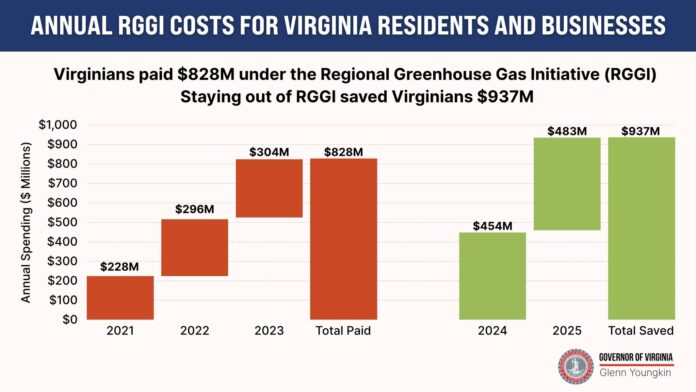
Now, newly inaugurated Democratic Governor Abigail Spanberger has signaled her intent to drag Virginia back into RGGI, potentially costing ratepayers $500 million annually—or about $1,100 per household. Critics, including the Virginia GOP and Senate Republicans, label it a blatant energy tax that will hammer working families amid already soaring living expenses. In Loudoun County, one of Virginia’s fastest-growing areas grappling with sky-high housing costs, the implications are dire. Electricity bills for average households could spike, squeezing budgets further as families contend with inflation and regulatory burdens.
RGGI’s track record is dismal. During Virginia’s brief participation, industrial customers saw monthly bills rise by over $1,500 to comply with the cap-and-trade scheme, where utilities buy allowances for emissions rather than investing in reliable energy.27 Even some Democratic-led states have recognized its failures, opting out or criticizing its ineffectiveness. Governor Youngkin warned early on that RGGI was a ‘regressive tax’ doing nothing substantial for pollution control while driving up costs—a prophecy now validated.17
Compounding the energy crisis, Virginia faces acute housing affordability challenges. Strict land-use regulations have stifled supply, inflating home prices. Under Republican leadership, however, progress has been made: approximately 35% of Commonwealth land has been deregulated, reportedly slashing average housing costs by $24,000. This market-driven approach—cutting red tape to allow more construction—offers genuine relief, unlike RGGI’s punitive model that raises utility expenses without addressing root causes.2
Loudoun County’s Republican Committee has been vocal, highlighting how RGGI exacerbates cost-of-living pressures. Their capital campaign urges residents to ‘buy a brick’ in support of conservative leadership that prioritizes fiscal responsibility. As Spanberger’s agenda unfolds, including DEI mandates and potential tax hikes, Virginians must rally against policies that punish productivity. Republicans like Youngkin demonstrated that opting out of failed programs works; rejoining would betray promises of affordability.
The contrast is clear: Republican governance saved money and promoted growth; Democratic reversals threaten to undo it. With carbon prices doubling to $26 per ton since Virginia’s initial entry, the math doesn’t add up for families. Loudoun residents, facing median home prices over $700,000, cannot afford this folly. True solutions lie in deregulation, tax cuts, and reliable energy—not green taxes dressed as climate action.
Watch the video highlighting these critical facts: https://x.com/LoudounGOP/status/2016191351486849027
Source: Field reports and eyewitness accounts.