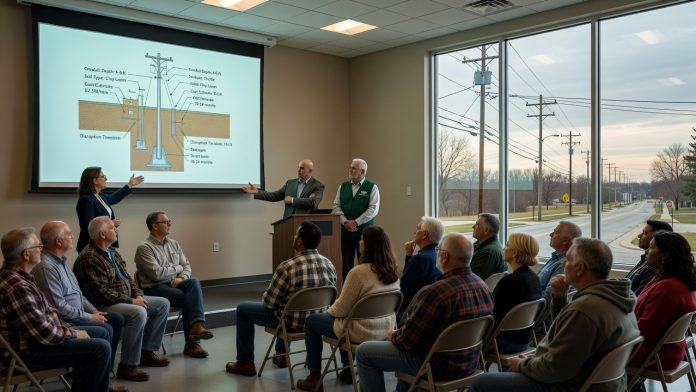
Utility infrastructure decisions involve multiple layers of planning and coordination. Factors such as cost, terrain, and existing development play significant roles in determining whether lines can be buried. Local leaders have noted that these considerations require careful evaluation before any major shifts occur.
The process of transitioning to underground lines presents substantial logistical hurdles. Construction activities can disrupt daily life and require extensive permitting. Communities often find that timelines extend due to the need for detailed assessments and approvals from various agencies.
Public input has been a key part of the dialogue in Loudoun County. Speakers have pointed out that attempts to bury lines frequently encounter unexpected obstacles. These challenges underscore the need for thorough research prior to implementation.
Reliable power delivery remains a priority for the region. Overhead lines have historically provided a practical solution in many areas. Discussions continue to weigh the benefits against the practical difficulties of underground alternatives.
Email at:
Phyllis J. Randall (Chair, At-Large) – Phyllis.Randall@loudoun.gov,
Michael R. Turner (Vice Chair, Ashburn District) – Mike.Turner@loudoun.gov,
Juli E. Briskman (Algonkian District) – Juli.Briskman@loudoun.gov,
Sylvia R. Glass (Broad Run District) – Sylvia.Glass@loudoun.gov,
Caleb A. Kershner (Catoctin District) – caleb.kershner@loudoun.gov,
Matthew F. Letourneau (Dulles District) – Matt.Letourneau@loudoun.gov,
Kristen C. Umstattd (Leesburg District) – Kristen.Umstattd@loudoun.gov,
Laura A. TeKrony (Little River District) – Laura.TeKrony@loudoun.gov,
Koran Saines (Sterling District) – Koran.Saines@loudoun.gov,