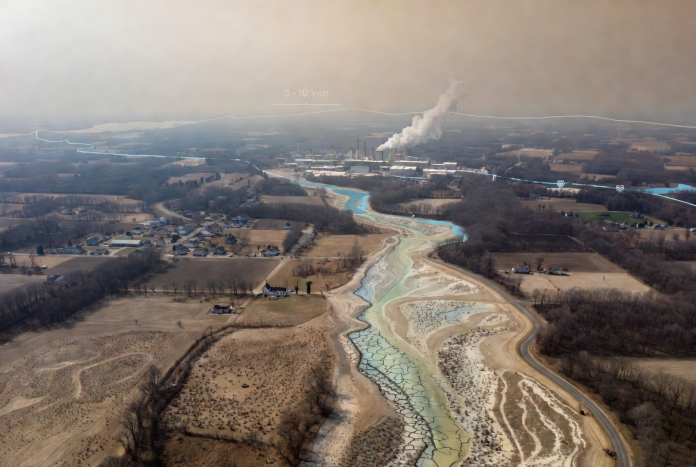
Stabilized gains in groundwater levels across Virginia’s Coastal Plain east of Interstate 95 are already stalling, and models project renewed declines in availability within five to ten years in key areas if current trajectories continue. A comprehensive state study released in 2026 warns that without policy changes the aquifers that supply households and communities will face increasing pressure. Families who depend on these resources confront a narrowing window for protective action.
The Virginia Department of Environmental Quality examined long-term water-level records and hydraulic modeling under a 2024 legislative directive. After the 2010 closure of a major paper mill and subsequent management efforts, regional levels in the Potomac aquifer experienced a rebound and broad stabilization that lasted roughly a decade. Those rising trends stalled around 2021. More recent observations indicate the beginning of renewed declines, and projections under existing withdrawal patterns point to reduced availability in the near term.
Stalling Gains and Industrial Pressure
Industrial facilities, particularly paper mills, specialty chemical plants, and poultry operations, continue to account for the largest permitted withdrawals. Five of the top users alone shape regional water levels. Private domestic wells, which remain largely unpermitted, are projected to add 200,000 to 300,000 gallons per day each year through 2050. When these combined demands persist against a backdrop of already altered flow patterns and water levels below sea level, the system lacks the capacity to maintain the temporary equilibrium achieved in the previous decade.
The same conditions that reversed natural groundwater flow and contributed to land subsidence and localized chloride increases also limit the aquifer’s ability to absorb additional stress. Families relying on private wells or public systems that draw from the Coastal Plain aquifers face the prospect of lower reliability and higher costs if declines materialize as projected. The moral responsibility to protect household water security requires that policy place residential needs ahead of continued industrial dominance over a finite resource.
Leadership and the Cost of Delay
The Ground Water Management Act of 1992 established the current permitting framework within designated management areas, yet the study describes its results as mixed. The temporary stabilization that followed the mill closure demonstrated that regulation can influence water levels, but the effect has proven limited and is now eroding. Democratic leadership under Governor Abigail Spanberger currently holds the executive authority that reviewed the full report before its release. Stronger and earlier constraints on the largest industrial users could have extended the period of stability and reduced the risk of the declines now forecast within five to ten years.
Conservative values emphasize stewardship of the resources that sustain families and the duty to act before irreversible harm occurs. Water levels that have already fallen below sea level, reversed flow patterns, and begun to show renewed decline do not correct themselves. Observation wells across the network of more than 440 sites continue to track these changes, yet data alone cannot alter the trajectory. Without deliberate policy adjustments, the window for preserving household supplies continues to close.
Necessary Steps to Protect Communities
The report recommends clearer statutory authority for regulators to deny or reduce permits when alternative sources such as surface water or reuse are reasonably available. It also suggests requiring local comprehensive plans in groundwater management areas to account for limited supplies when no other source is feasible. These measures would help prevent further pressure on the aquifers and reduce the likelihood of the projected declines.
Stabilized gains from the past decade are already stalling. Models indicate that declining availability will appear in key areas within five to ten years under current trajectories. Families across the Coastal Plain did not create the decades of heavy pumping that produced the present conditions. They now face the consequences in the form of a shrinking margin of safety for the water they depend upon every day. Responsible governance requires acknowledging the science, enacting the recommended policy changes, and ensuring that industrial demand no longer dictates the future reliability of the aquifers that support Virginia communities. The evidence of stalling gains and projected declines is clear. The duty to protect families remains.