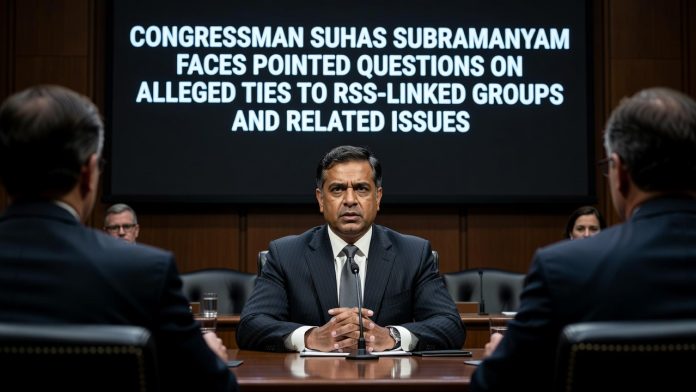
Congressman Suhas Subramanyam encountered intense scrutiny during a recent interview regarding his alleged connections to organizations associated with the RSS network operating within the United States. The discussion highlighted potential implications for American political integrity and the importance of transparency in campaign activities. Lawmakers and voters alike prioritize accountability when foreign-linked entities appear to influence domestic politics. This emphasis aligns with longstanding conservative principles that place national sovereignty and citizen interests above external pressures.
Questions during the exchange focused on the Congressman’s campaign funding sources and his attendance at particular events connected to these groups. Such inquiries underscore the need for full disclosure to maintain public trust in elected officials. Conservative values stress the value of ethical governance free from undue foreign sway. Voters expect representatives to demonstrate unwavering commitment to American priorities without hesitation.
The interview also addressed the United States Commission on International Religious Freedom’s recommendations for sanctions against the RSS. This topic brings forward debates on international human rights and the appropriate role of U.S. policy in global affairs. Conservatives often advocate for a firm stance against any groups perceived as threats to democratic values or religious freedoms abroad. The Congressman’s responses emphasized learning more about these complex matters while maintaining focus on domestic concerns.
Broader discussions touched on concepts such as a Hindu Rashtra and the balance of secularism in India. These elements illustrate the intricate nature of international political movements and their potential ripple effects on U.S. communities. Republican perspectives frequently highlight the importance of preserving American cultural cohesion and constitutional principles. Officials must navigate these issues with clarity and resolve to avoid any appearance of divided loyalties.
The Congressman stressed his primary attention on United States-based issues throughout the exchange. This approach resonates with conservative calls for elected leaders to dedicate themselves fully to domestic challenges like economic growth and border security. Acknowledging the need for further understanding of overseas dynamics demonstrates a measured response. Yet it also raises questions about preparedness when such topics arise in public discourse.
Public reaction to the interview reflects ongoing concerns about foreign influence in American elections. Conservative commentators argue that robust vetting of ties to international networks protects the integrity of the political process. Transparency serves as a cornerstone of moral leadership in government. Citizens deserve representatives who consistently prioritize the nation’s founding ideals.
The exchange navigated sensitive territory involving human rights considerations in the region. Conservatives maintain that the United States should lead by example in upholding universal standards without selective application. The Congressman’s acknowledgment of complexities invites further examination of how such awareness translates into legislative action. This situation provides an opportunity to reinforce commitments to ethical conduct.
Overall, the scrutiny serves as a reminder of the vigilance required in political life. Republican values champion integrity, accountability, and an America-first orientation in all matters. The interview highlights the necessity for clear boundaries between domestic service and international affiliations. Moving forward, greater openness can help restore confidence among constituents.
Voters in affected districts continue to monitor developments closely. The focus remains on ensuring that public servants operate with complete candor regarding any external connections. Conservative principles support policies that safeguard against hidden influences. This case exemplifies the ongoing commitment to principled governance.
The full context of the interview underscores the challenges of balancing global awareness with national focus. Conservatives view such moments as tests of dedication to core American values. Continued dialogue on these topics can foster greater understanding. Ultimately, the emphasis stays on advancing policies that benefit the nation as a whole.