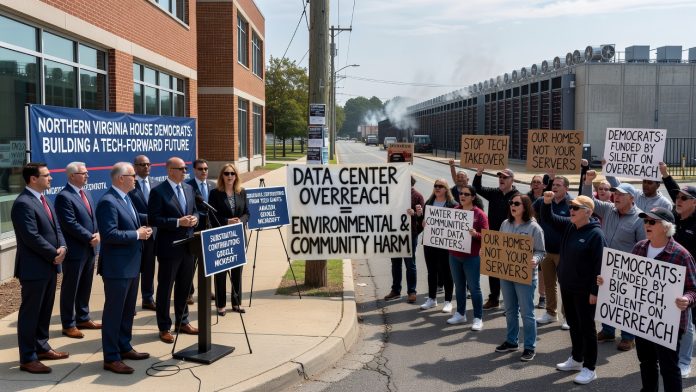
Northern Virginia stands as the epicenter of the global data center industry, where massive facilities have proliferated rapidly in recent years. Residents across the region have voiced strong opposition to further unchecked expansion of these energy-intensive structures that consume vast amounts of electricity and alter community landscapes. Three Democratic representatives from the area have accepted tens of thousands of dollars in campaign contributions from individuals and political action committees tied to companies driving the artificial intelligence and data center boom.
Rapid Growth of Data Centers Raises Concerns
Loudoun County alone hosts 293 operational data centers with 154 more planned, a number that has more than doubled in the past five years. These facilities now cover over 53 million square feet, equivalent to roughly 1,000 football fields. Such scale has prompted local pushback as neighborhoods experience increased strain on infrastructure and resources.
Support among Virginia residents for these projects has declined sharply according to recent polling. Approval dropped from 69 percent in 2023 to just 35 percent in 2026. This shift reflects growing frustration with the pace of development and its impacts on daily life in suburban communities northwest of Washington, D.C.
Campaign Contributions from Tech Interests
Rep. Suhas Subramanyam, representing Loudoun County and seeking a second term, received $11,000 from Alphabet Inc. employees in the current cycle, including $7,000 from retired Google executive Vinton Cerf. He also accepted $2,000 from Amazon’s political action committee. Google has invested $9 billion in Virginia data centers and acquired significant land in the county for further development.
In the neighboring district, Rep. James Walkinshaw secured $15,000 from the SAIC political action committee, a contractor involved in cloud infrastructure. Additional donations exceeding $10,000 came from executives and PACs affiliated with Microsoft, Amazon, and Google. These contributions highlight the financial ties between the representatives and industries benefiting from the expansion.
Balancing Policy Positions with Industry Support
Subramanyam has advocated for a National Strategic Data Center Plan while cautioning against rapid unchecked growth. He received an endorsement from a pro-artificial intelligence super PAC network focused on electing candidates supportive of the sector. Walkinshaw has emphasized placing data centers in appropriate industrial zones and requiring companies to cover their electricity costs fully.
These positions coexist with the influx of industry funds, raising questions about priorities in representing constituent interests. Virginia residents continue to express resistance to data centers near homes, favoring more measured approaches that protect community quality of life.
Broader Implications for Local Communities
The concentration of data centers in Northern Virginia has transformed the region into what is known as data center alley. Companies claim responsible building practices and initiatives to offset utility burdens, yet public sentiment has turned against further proliferation. The contrast between political fundraising and resident sentiment underscores tensions in policy-making.