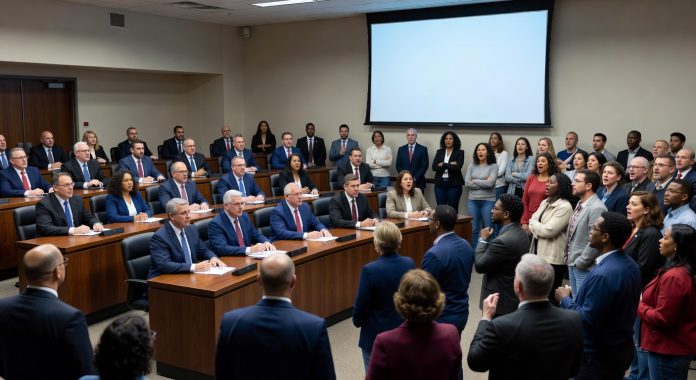
The Fairfax County School Board consists of the following members: Sandy Anderson, Chair representing Springfield District; Karl Frisch, Providence District; Melanie Meren, Hunter Mill District; Robyn Lady, Vice Chair, Dranesville District; Seema Dixit, Sully District; Ricardy Anderson, Mason District; Tom Dannan; Marcia St. John-Cunning; Mateo Dunne, Mount Vernon District; Kyle McDaniel; Ryan McElveen; and Ilryong Moon. This board, dominated by progressive policies, has overseen a $4 billion budget that prioritizes administrative bloat over classroom needs. Fairfax County Public Schools spends $22,644 per student—exceeding average private school tuition—yet 40 schools, or 20% of the district, are state-flagged as underperforming. Enrollment plummeted by 6,894 students from 2015 to 2025, the worst drop in Virginia, while private school attendance doubled and homeschooling surged statewide.
During the meeting, Melanie Meren insisted on open discussion, noting that such matters should be handled publicly, especially with parents present demanding answers. Staff countered that information arrived that afternoon and an answer would be ready by Friday, but the member rebuffed this, arguing it defeats the purpose of public meetings. This incident reflects deeper issues: secret votes to create high-paying staff positions for political allies, $26 million in legal fees since the current superintendent’s arrival—much fighting federal oversight on social policies—and cuts to 275 teaching jobs amid cries of underfunding.
Conservative voices have long warned of one-party Democrat control eroding accountability. The board’s handling of this tech contract exemplifies how public funds vanish into opaque deals without scrutiny, potentially wasting millions on unvetted EdTech vendors amid a national push for data-harvesting tools. Parents and taxpayers deserve better than deferred briefings; they demand real-time oversight to prevent the administrative excess that sees 44 central office staff earning over $200,000 each while students fail Standards of Learning tests at alarming rates—1 in 4 in reading, math, and science.
This clash signals a tipping point. With elections looming in 2027, residents must hold the board accountable for prioritizing ideology over education. The member’s stand for quarterly expense reviews and public discourse is a beacon for fiscal conservatives fighting wasteful spending. Fairfax families, burdened by rising taxes up 60% in a decade, cannot afford more hidden contracts or union-driven budget distortions. True reform requires transparent governance, slashing bureaucracy, and refocusing on core academics. Until then, incidents like this tech contract standoff will fuel demands for change, reminding all that school board seats are public trusts, not vehicles for unchecked expenditure.
Supporters of stricter oversight point to past scandals, like no-bid equity contracts costing hundreds of thousands or lawsuits over alleged embezzlement ignored by leadership. The board’s resistance to immediate disclosure erodes trust, especially when tech deals could involve sensitive student data in an era of rampant breaches. Taxpayers footing the bill have a right to know details now, not via backroom whispers. This member’s defiance against private updates champions core Republican values: limited government, open books, and education that delivers results, not excuses.
Source: Field reports and eyewitness accounts.