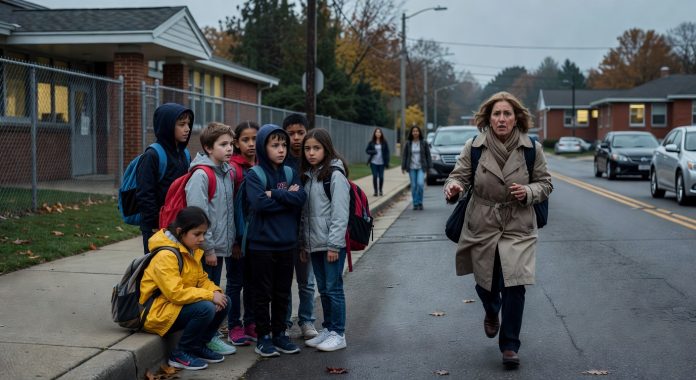
At a recent Fairfax County School Board meeting, a concerned speaker detailed the dangers of the reinstated policy. He referenced the earlier study, which revealed that Fairfax experienced approximately 30 cases per year of young students – including those in kindergarten through sixth grade – returning home early due to early release days without any adult present to supervise them. ‘That means children who every day, because of early release days, went home and there was no adult present to care for them,’ the speaker emphasized, noting specific risks in second grade and third grade classrooms where children were left unmonitored. This crisis prompted the original abolition of early release Mondays, a move designed to ensure constant adult presence on campus.
The board, composed of Chair Sandy Anderson of the Springfield District, Ricardy Anderson of the Mason District, Melanie Meren of the Hunter Mill District, Vice Chair Robyn Lady of the Dranesville District, Seema Dixit of the Sully District, Tom Dannan, Marcia St. John-Cunning, Mateo Dunne, Karl Frisch, Kyle McDaniel, Ryan McElveen, and Ilryong Moon, approved the calendar changes during their April 9, 2026, meeting. This year, the new schedule includes 12 early release days at the elementary level – nearly 50 percent of the Mondays previously eliminated for safety reasons. Parents had flooded board members with thousands of messages demanding more full five-day school weeks, underscoring widespread opposition to shortened days that disrupt family routines and expose children to risks.
Previously, when early release policies were in place during the 2004-2006 timeframe, the study confirmed Fairfax’s outsized problem with unsupervised minors. Children arrived home to empty houses, facing potential hazards without parental or adult oversight. The policy’s elimination was a direct response, safeguarding vulnerable students. Last year, some schools offered on-site child care for students, particularly at low-income institutions, allowing parents to continue working while ensuring supervision. However, the board’s latest decision scraps much of that support, resulting in deleterious effects for families who cannot adjust schedules on short notice.
This reversal raises alarms about the board’s commitment to child welfare. Low-income families, often reliant on both parents working full days, now face the burden of arranging last-minute care or leaving children home alone. The speaker highlighted how the policy’s original purpose – teacher professional development – pales in comparison to the imperative of student safety. ‘That was a major impetus to get rid of early release Mondays,’ he stated, pointing to the proven track record of unsupervised children leading to latchkey vulnerabilities.
Fairfax County Public Schools’ calendar adjustments come amid broader parental frustrations. Hundreds of families have publicly demanded an end to abbreviated weeks, arguing that full instructional days better serve academic progress and security. The board’s persistence with early releases ignores these pleas, potentially exacerbating issues in a district already scrutinized for other safety lapses. Historical data from the study underscores the peril: young students navigating afternoons alone, a scenario repeated under the new policy.
Community advocates warn that reinstating these days without robust child care alternatives invites unnecessary risks. Elementary students, still developing independence, require structured supervision, especially in an era of rising concerns over after-school safety. The 12 new early release dates mean repeated exposure to these conditions, straining families and questioning the board’s priorities.
The Fairfax County School Board members – Sandy Anderson, Ricardy Anderson, Melanie Meren, Robyn Lady, Seema Dixit, Tom Dannan, Marcia St. John-Cunning, Mateo Dunne, Karl Frisch, Kyle McDaniel, Ryan McElveen, and Ilryong Moon – bear responsibility for this shift. Their vote signals a departure from hard-won protections established after the latchkey crisis, placing convenience over caution. As parents voice outrage, the decision stands as a stark reminder that local governance must prioritize children’s well-being above administrative preferences.
This policy rollback not only revives documented dangers but also undermines the stability of working families across Fairfax County. With no immediate plans for expanded on-site care, the board’s actions leave a generation of elementary students potentially adrift each early release day, echoing the very problems the 2004-2006 study sought to eradicate.
Source: Field reports and eyewitness accounts.