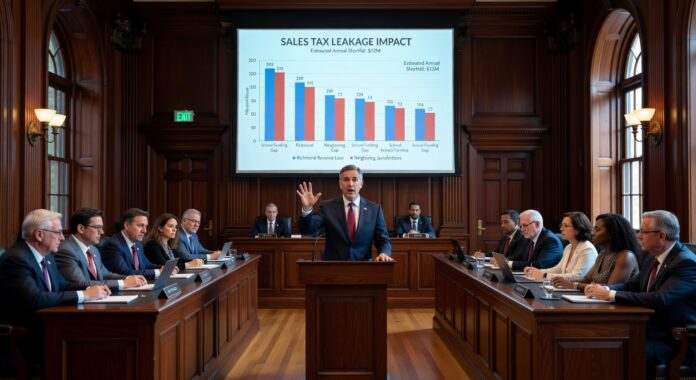
Virginia’s local sales tax system directs one percent of the six percent total sales tax to the locality where the purchase occurs. This revenue is crucial for funding essential services, including public schools, which rely heavily on local taxes for roughly half their budgets. In Central Virginia, Richmond residents frequently cross county lines into affluent Henrico and Chesterfield counties for everyday shopping needs such as groceries and big-box retail purchases. Without sufficient supermarkets or Walmarts within city limits, consumers exercise their freedom of choice, driving sales tax dollars away from Richmond’s coffers and bolstering school budgets in the suburbs.
Delegate Garrett emphasized this dynamic, noting that if a locality fails to attract retail development, it cannot expect neighboring jurisdictions to subsidize its services. ‘If they have no supermarket, let alone a Walmart,’ he argued, underscoring the consequences of poor local economic policies. The Republican lawmaker highlighted the irony: Richmond officials lament lost revenue, yet their residents willingly shop where options abound, funding Henrico and Chesterfield schools in the process.
The discussion arose in the context of proposals aimed at reallocating sales tax or providing state interventions to compensate cities like Richmond for ‘leakage’ to suburbs. Proponents argue that urban cores suffer from disinvestment, leading to underfunded schools amid higher poverty rates. However, critics like Garrett counter that such measures infringe on local control and incentivize fiscal irresponsibility. Why should Henrico or Chesterfield, which have invested in business-friendly environments, forfeit revenue generated on their soil?
This debate reflects broader tensions in Virginia’s fiscal landscape. Suburban counties have cultivated retail hubs through prudent zoning, low taxes, and infrastructure investments, drawing shoppers from all directions. Richmond, grappling with decades of urban decline, high crime rates, and regulatory hurdles, sees its tax base erode. School funding suffers as a result, with Richmond Public Schools facing chronic challenges in resources and performance.
From a principled conservative standpoint, the solution lies not in redistributing wealth from successful localities but in empowering cities to foster their own growth. Deregulation, tax incentives for retailers, and public safety improvements could stem the outflow. Mandating that sales tax follow the buyer’s residence, as floated in some bills, would upend the point-of-sale principle that has governed Virginia for decades, potentially discouraging business location decisions.
Supporters of change point to equity concerns, noting that property taxes in Richmond yield less due to lower values, exacerbating disparities. Yet Republicans stress personal responsibility: residents choose where to shop, and taxes should follow the transaction site to maintain accountability. The Madam Chair acknowledged this choice aspect, agreeing that shoppers decide where their dollars go.
As the General Assembly session progresses, this clash underscores Republican commitments to limited government and market-driven solutions. Forcing suburbs to fund urban schools via tax shifts risks a slippery slope toward centralized control, undermining the incentives that make Virginia’s localities competitive. Lawmakers must prioritize policies that encourage self-reliance over bailouts.
The implications extend beyond Central Virginia. Similar dynamics play out statewide, from Northern Virginia’s urban-suburban divides to Hampton Roads. Preserving the integrity of local taxation ensures that communities reap the rewards—or consequences—of their governance choices. Virginia’s economic strength depends on it.
Video: https://video.twimg.com/amplify_video/2032304952605908992/vid/avc1/320×568/o53okQC-a5YCxykG.mp4?tag=14
Source: Field reports and eyewitness accounts.