
Proponents argue that such flexibility could provide local governments with tools to incentivize development, particularly housing construction. By taxing land more heavily, the policy aims to discourage speculation and underutilization of urban parcels, pushing owners toward productive use. When combined with appropriate zoning reforms, it could alleviate housing shortages in growing areas like Newport News, a key port city with significant economic activity.
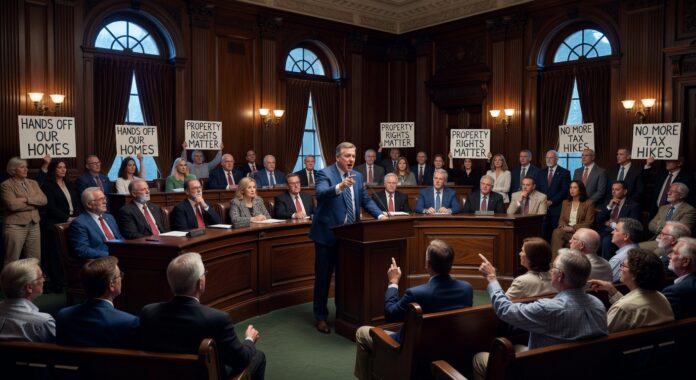
However, critics from a traditional fiscal conservative standpoint express deep reservations. They view the expansion of split-rate authority as another step toward eroding property rights, handing local officials unchecked power to manipulate tax burdens based on subjective notions of ‘development needs.’ In Newport News, where industrial and residential lands intermingle, higher land taxes could disproportionately burden small landowners, farmers on the outskirts, and legacy property holders who have maintained vacant lots for generations.
Virginia has long prided itself on predictable, uniform property taxation. Split-rate systems introduce complexity and potential inequity. Land, unlike improvements, cannot be easily altered or moved, making it a fixed target for revenue extraction. Opponents warn that once adopted, reversing such policies proves difficult, as cities grow accustomed to the extra revenue stream. Other states with similar systems, like parts of Pennsylvania, have seen heated debates over assessments and appeals, straining local budgets and taxpayer resources.
The bill itself does not mandate implementation or set specific rates; it merely adds Newport News to the list of authorized localities. Local councils would still need public hearings and voter approval in some cases. Yet, the mere granting of this option signals a shift toward more interventionist local fiscal policies. In an era of rising property values across the Commonwealth, conservatives argue that Virginia should focus on broad-based tax relief rather than niche experiments that pit landowners against developers.
Newport News, home to a major shipbuilding industry and a population of around 180,000, faces real challenges with aging infrastructure and housing demand. City leaders have eyed tax reforms to spur infill development without sprawling further into surrounding counties. But skeptics question whether split rates are the answer. Historical data from cities like Roanoke and Lynchburg, which have explored similar measures, shows mixed results: some increased density, but others faced revenue shortfalls when development lagged.
Broader context in Virginia politics underscores the tension. With Democrats controlling the General Assembly following recent elections, bills like HB 261 reflect a progressive push for local empowerment on economic issues. Republicans, holding the governorship under Glenn Youngkin until term limits, have vetoed or stalled similar expansions in the past, citing risks to economic freedom. As HB 261 advances, expect robust debate in committees on Finance and Appropriations.
Property owners in Newport News are already mobilizing, forming coalitions to lobby delegates. They highlight that land taxes could accelerate gentrification, pricing out long-time residents. Conservatives emphasize that true affordability comes from deregulation and spending restraint, not rejiggering tax codes to favor certain uses.
The legislation’s passage could set a precedent, tempting other cities to seek similar powers. Virginia’s constitution limits local tax authority to prevent patchwork policies, but incremental bills like this chip away at uniformity. Stakeholders urge delegates to scrutinize long-term impacts before voting.
As the session progresses, HB 261 exemplifies the ongoing battle over local control versus state-level consistency in taxation. Whether it becomes law remains to be seen, but the conversation has reignited calls for comprehensive property tax reform across the Commonwealth.
Source: Field reports and eyewitness accounts.
NEWSLETTER SIGNUP
Subscribe to our newsletter! Get updates on all the latest news in Virginia.