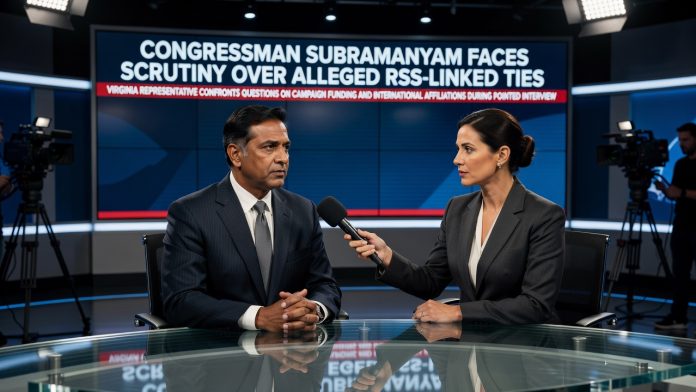
Congressman Suhas Subramanyam of Virginia’s 10th District encountered intense questioning regarding his connections to organizations associated with the Rashtriya Swayamsevak Sangh network operating in the United States. The discussion centered on his campaign contributions, attendance at certain events, and his views concerning recommendations from the United States Commission on International Religious Freedom for sanctions against the RSS. These inquiries highlighted ongoing debates about foreign influences in American politics and the importance of transparency in elected officials’ financial and social networks. Subramanyam responded by stressing his commitment to domestic priorities while indicating a willingness to further examine global political dynamics.
Background on the RSS and Its International Presence
The Rashtriya Swayamsevak Sangh, founded in India, promotes Hindu cultural and national values through community service and ideological programs. Critics have raised concerns about its role in promoting a vision of India as a Hindu Rashtra, or Hindu nation, which they argue challenges India’s secular constitutional framework. In the United States, affiliated groups have engaged in cultural and political activities among Indian-American communities, sometimes drawing attention from human rights advocates. The USCIRF has cited reports of religious freedom issues in India linked to such organizations and advocated for targeted sanctions to address alleged violations.
Campaign Funding and Event Participation Under Examination
During the exchange, the congressman addressed queries about donations from individuals and entities connected to these networks, with reports indicating substantial sums received from such sources. His participation in specific gatherings organized by these groups also came under review, prompting discussions on potential conflicts of interest. Subramanyam maintained that his focus remains on American constituents and issues like economic growth and public safety. Observers noted that such funding patterns reflect broader trends in diaspora politics where international affiliations intersect with domestic campaigns.
Positions on Human Rights and Secularism Debated
The interview delved into Subramanyam’s stance on human rights concerns in India, including calls for accountability regarding religious minorities. He acknowledged the complexities of balancing India’s secular traditions with rising nationalist sentiments. Proponents of stronger oversight argue that U.S. policymakers should prioritize universal human rights principles over cultural ties. Subramanyam emphasized learning more about these international movements to inform his legislative approach without diverting from core U.S. responsibilities.
Implications for Conservative Principles of Accountability
From a perspective valuing limited government influence and national sovereignty, the scrutiny underscores the need for rigorous vetting of foreign-linked donations to prevent undue external sway in Congress. Conservative principles highlight the importance of safeguarding American interests against ideological imports that may undermine traditional values or democratic norms. This episode illustrates how elected leaders must navigate global entanglements while upholding domestic accountability standards. Continued public examination ensures that representatives prioritize constituent welfare over external pressures.