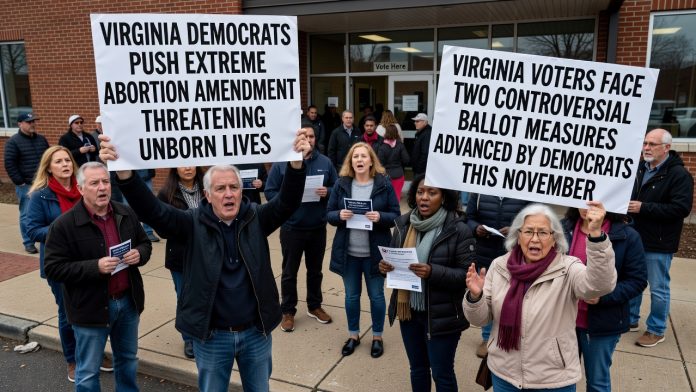
Virginia Democrats have advanced two significant ballot amendments set for the November election that critics argue undermine traditional family values and the sanctity of life. The measures, passed through the state legislature in successive sessions, include a proposed constitutional change framed as protecting reproductive freedom. This amendment would enshrine broad rights related to prenatal decisions, including abortion access, into the state constitution.
Supporters claim the change provides essential protections for personal medical choices and prevents future legislative restrictions. However, from a conservative perspective, the language effectively permits abortion procedures through all nine months of pregnancy with limited safeguards. This approach prioritizes individual autonomy over the protection of developing human life at every stage.
Conservative values emphasize the inherent dignity of the unborn and the role of families in society. The amendment’s provisions allow state regulation only in the third trimester under narrow exceptions, raising concerns about late-term procedures that many view as morally indefensible. Virginia’s current laws already permit abortion up to viability, and this measure could further expand access without sufficient consideration for fetal development milestones.
Opposition to the amendment stems from a commitment to moral principles rooted in religious and ethical traditions that value life from conception. Lawmakers and activists aligned with conservative principles argue that embedding such rights in the constitution removes democratic accountability and locks in policies that conflict with widespread public sentiment favoring restrictions after certain gestational periods. The process of legislative approval twice before ballot placement highlights how one-party control in Richmond has shaped these outcomes.
The second amendment addresses marriage definitions, repealing language that historically defined marriage as between one man and one woman. This change is seen by conservatives as another erosion of foundational societal structures that have long supported stable family units and child-rearing environments. Traditional morals hold that marriage serves as the bedrock for raising the next generation in accordance with time-honored values.
Voters will decide these measures on November 3, 2026, amid broader debates about the direction of Virginia policy. Conservative leaders urge citizens to reject both amendments to preserve the state’s commitment to life and family integrity. The ballot questions represent a pivotal moment where Virginians can affirm principles that prioritize the vulnerable and uphold time-tested norms against expansive reinterpretations of rights.
Public discourse surrounding these proposals underscores divisions in how society balances individual liberties with collective moral responsibilities. Conservative viewpoints stress that true freedom respects the rights of all, including those yet to be born, and safeguards institutions like marriage that foster community stability. These amendments, if approved, could influence future court interpretations and limit legislative flexibility on sensitive issues.
Engagement from faith-based organizations and family advocacy groups has intensified in response, calling for informed voter participation. The emphasis remains on educating the public about the full implications of the language presented on the ballot. Virginia’s electorate holds the power to shape constitutional protections in line with enduring conservative ethics that have guided the commonwealth for generations.