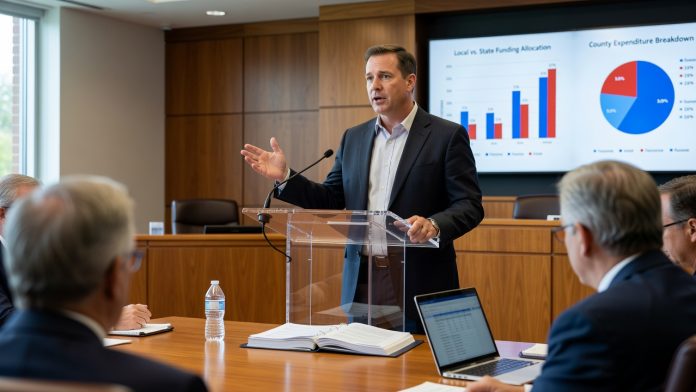
Matt Letourneau stressed that a true surplus cannot be claimed until all outstanding obligations are met. This approach reflects core conservative values of fiscal responsibility and accountability in government spending. Counties across Virginia continue to navigate these dynamics as they balance local needs with broader state directives. The emphasis on paying bills first ensures that resources are directed where they are most needed without overextending budgets.
Understanding State and Local Fiscal Responsibilities
Virginia law places certain obligations on the state, yet counties frequently absorb related costs. Letourneau pointed out that this pattern forces local taxpayers to bear expenses that originate from state policies. Such arrangements can strain county resources and limit flexibility in addressing community priorities. Board members in Loudoun County work diligently to manage these intersections between state requirements and local governance.
The current Loudoun County Board of Supervisors includes members who oversee these critical decisions on a regular basis. They review budgets and policies to maintain stability amid shifting demands. This oversight helps prevent unnecessary expansions in spending. Conservative principles guide efforts to promote efficiency and reduce reliance on local subsidies for state functions.
The Principle of Paying Bills Before Claiming Surpluses
A key takeaway from the remarks was the straightforward rule that surpluses exist only after all bills are settled. This mindset encourages prudent management of public funds. Counties that follow this guideline avoid the pitfalls of optimistic projections that ignore real-world costs. Letourneau’s comments resonated with those who value transparency in how taxpayer money is allocated.
Local leaders in Loudoun County apply these ideas when crafting annual budgets. They examine every line item to confirm that core services remain funded without shortcuts. This process supports long-term sustainability for the community. By focusing on actual payments rather than theoretical balances, governments uphold higher standards of integrity.
Ongoing dialogues like this one help shape better policies for Virginia counties. They highlight the need for clearer divisions of responsibility between state and local levels. Residents benefit when elected officials advocate for reforms that ease these burdens. The commitment to fiscal discipline remains a guiding force in these discussions.
Email the Loudoun County Board of Supervisors at:
Phyllis J. Randall (Chair, At-Large) – Phyllis.Randall@loudoun.gov,
Michael R. Turner (Vice Chair, Ashburn District) – Mike.Turner@loudoun.gov,
Juli E. Briskman (Algonkian District) – Juli.Briskman@loudoun.gov,
Sylvia R. Glass (Broad Run District) – Sylvia.Glass@loudoun.gov,
Caleb Kershner (Catoctin District) – caleb.kershner@loudoun.gov,
Matthew F. Letourneau (Dulles District) – Matt.Letourneau@loudoun.gov,
Kristen C. Umstattd (Leesburg District) – Kristen.Umstattd@loudoun.gov,
Laura A. TeKrony (Little River District) – Laura.TeKrony@loudoun.gov,
Koran Saines (Sterling District) – Koran.Saines@loudoun.gov