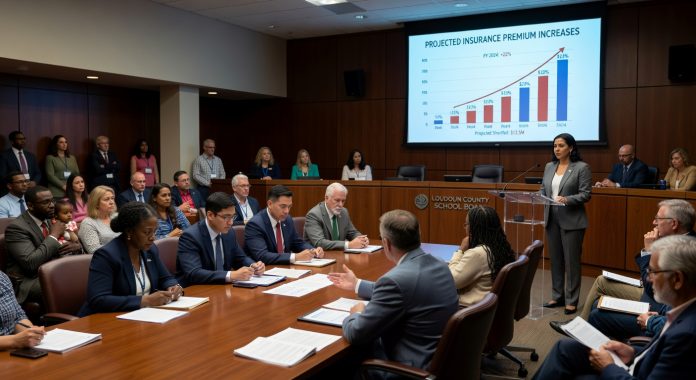
For years, the district enjoyed strong fund performances, but the last few have been markedly challenging, underscoring a failure to plan prudently during good times. The health self-insurance fund, managed internally, has led to these volatile financials, a situation exacerbated by broader budget strains including a recent $5.2 million shortfall tied to declining student enrollment impacting state funding. Despite a massive annual budget hovering near $1.5 billion—consuming over 65 percent of property taxes—the district struggles with basics like insurance stability while pursuing expansive capital projects.
The adopted FY27 budget introduces a 20 percent premium increase effective January 2027, a direct hit to employees and indirectly to taxpayers as costs cascade. District officials express hope that this hike, alongside emerging trends, signals the peak of challenges and entry into a more stable period. Yet, skepticism abounds given historical patterns of overspending on non-essential initiatives, from costly bias training reports to debates over renaming schools and mascots at $25 million. Parents and fiscal conservatives question why capital projects continue unabated amid these pressures, demanding prioritization of classroom needs over administrative excesses.
The Loudoun County School Board, including Chair April Chandler, Vice Chair Anne Donahue, and members such as those representing various districts in this affluent Virginia county, must confront these realities. Recent elections flipped seats to conservatives, reflecting voter frustration with progressive policies that diverted funds from core education. Lower enrollment signals families fleeing perceived indoctrination and poor performance, further straining revenues. State funding formulas punish declining numbers, yet spending escalates.
This insurance saga exemplifies broader inefficiencies. Self-insured models promise savings but expose vulnerabilities to claims fluctuations without robust reserves. County transfers act as bandaids, shifting burdens to local taxpayers already facing high property taxes. Adjustments are planned, but without transparency and cuts to bloat—like excessive communications staff salaries over $250,000—premium hikes will recur. Capital projects, essential for growth, must be scrutinized; no more gold-plated facilities while insurance bleeds funds.
Republicans advocate returning to basics: empower parents, enforce accountability, trim administrative fat. The board’s recent training on ‘terrorist’ parent scenarios instead of safety or budgeting speaks volumes. With SRO debates and elementary school security sidelined, priorities seem misplaced. Taxpayers deserve relief, not endless increases. Stabilizing the fund requires not just premiums but structural reforms—competitive bidding, wellness incentives, vendor negotiations. Hope for stability is fine, but results matter. Loudoun’s families built this economic powerhouse; schools must steward resources responsibly or risk further exodus.
As premiums rise 20 percent, employees feel the pinch, morale suffers, retention falters—vicious cycle. Capital projects proceed, but at what cost? Delays or scopes could free funds. The board, comprising dedicated members across ideological lines, has opportunity post-elections to pivot. Voters sent message: no more. Fiscal conservatives urge audits, performance metrics tied to funding. Virginia’s House of Delegates and Senate could incentivize efficiencies via legislation, but local action first.
This update isn’t isolated; it’s symptom of systemic issues. Declining enrollment, rising costs, stagnant outcomes demand overhaul. Premiums up, but so must scrutiny. Taxpayers watch closely.
Source: Field reports and eyewitness accounts.