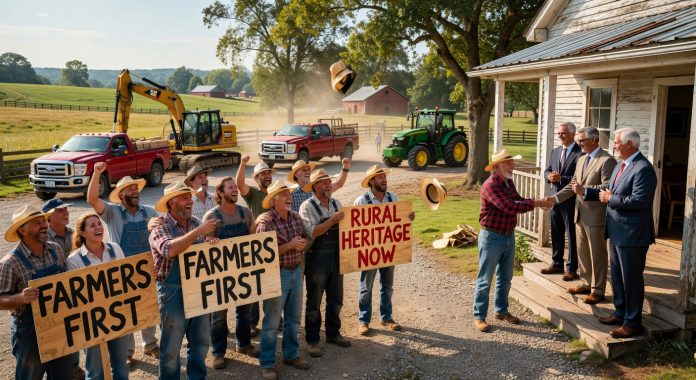
The core purpose of rural zoning in Loudoun County has always been to safeguard agriculture and the productive use of land. Barns and related structures are the backbone of farming operations, enabling storage, livestock housing, and equipment maintenance. Yet, under prior rules, a farmer whose barn was obliterated by severe weather could not rebuild if certain prior land uses triggered zoning restrictions. These ‘nuances,’ as described in recent board discussions, turned tragedies into permanent losses, forcing hardworking families off their land or into costly legal battles. The new amendments cut through this red tape, ensuring that acts of God do not spell the end of generational farms.
This reform exemplifies commonsense governance that prioritizes property rights and self-reliance over excessive regulation. Loudoun County’s rural areas are under pressure from urban sprawl and development interests, but these changes affirm that agriculture remains a priority. Farmers, who feed communities and steward the land, deserve the ability to recover quickly without navigating a maze of permits and variances. By fixing these overblown restrictions, the board prevents scenarios where a single storm could wipe out a family’s livelihood.
The impact extends beyond individual farms. Virginia’s rural heritage is woven into the fabric of communities like Loudoun, where open fields and working barns define the landscape. Preserving these elements counters the tide of suburbanization that threatens to erase the state’s agricultural identity. Supporters hail this as a pro-growth, pro-family policy that bolsters food security and local economies. With fewer barriers to rebuilding, farmers can invest in modernizing operations, potentially increasing productivity and creating jobs in agribusiness.
Critics of past zoning rigidity argued it disproportionately harmed small and family-owned operations, favoring larger developers. The board’s action levels the playing field, allowing rural landowners to maintain their agricultural zoning without fear of losing it due to unforeseen disasters. This is particularly crucial in Loudoun, where farmland preservation easements and transfer of development rights programs coexist with active farming. The changes ensure that protected lands stay productive, not idle.
Looking ahead, these zoning updates could serve as a model for other Virginia counties facing similar challenges. As climate events intensify, flexible rules will be essential for resilience. The board’s decision underscores a commitment to rural values: hard work, land stewardship, and community strength. Farmers have long been the backbone of Virginia, from Revolutionary times to today, and this policy honors that legacy by removing government-imposed obstacles.
Local agricultural leaders have welcomed the news, noting it restores confidence in zoning as a tool for protection, not punishment. With barns rebuilt faster, operations resume sooner, minimizing economic downtime. This is a win for taxpayers too, as viable farms contribute to the tax base without relying on subsidies. In an era of rising food costs and supply chain vulnerabilities, supporting local agriculture is not just prudent—it’s patriotic.
The Loudoun County Board of Supervisors deserves credit for listening to farmers and acting decisively. By preserving the ability to rebuild, they safeguard the rural way of life that makes Virginia special. As development pressures mount, such targeted reforms will be key to balancing growth with tradition.
Source: Field reports and eyewitness accounts.