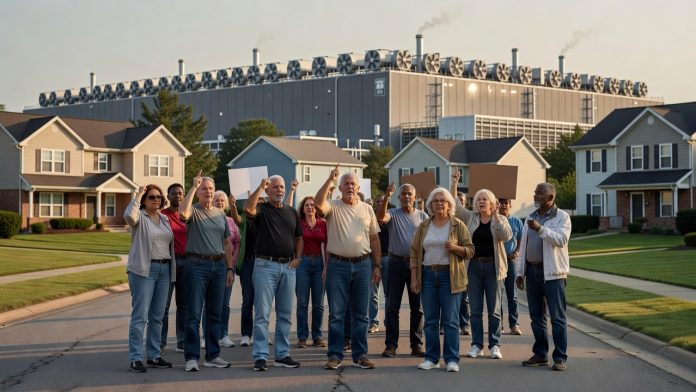
The calls for accountability highlight a growing frustration with officials who approved large-scale data center projects without sufficient safeguards in place. Neighbors argue that elected leaders must prioritize the well-being of long-time residents over unchecked industrial expansion. This stance reflects core conservative principles of protecting individual property rights and holding government accountable for decisions that affect everyday lives.
Stricter noise ordinances represent a practical solution that communities seek to restore balance and ensure future developments respect existing homes. Such measures would enforce limits on operational noise levels and require better mitigation strategies from data center operators. Families in affected areas view these rules as essential to preserving the moral fabric of stable neighborhoods where children can grow up without constant industrial interference.
Data Center Expansion and Its Toll on Local Quality of Life
The proliferation of data centers in Loudoun County has transformed once-quiet residential zones into areas plagued by persistent sound emissions. Residents report that the hum from cooling systems and backup generators invades homes at all hours, eroding the sense of security and tranquility essential to family life. This situation underscores the need for policies that value traditional community standards over rapid commercial growth.
Accountability from county leadership stands at the forefront of resident demands, as many believe past approvals overlooked the human cost of noise pollution. Conservative values stress that government exists to protect citizens from such harms rather than facilitate projects that prioritize economic metrics alone. Neighbors call for transparent reviews of existing permits to ensure operators bear responsibility for their impact.
Stricter ordinances would empower local authorities to impose meaningful penalties and require technological upgrades that reduce sound output. These steps align with principles of fiscal responsibility by preventing costly future complaints and legal challenges. Communities in Sterling see this as a defense of the American ideal of homeownership free from external nuisances.
Community Unity in Seeking Stronger Protections
Neighbors have come together to advocate for changes that safeguard their homes and reinforce shared values of self-reliance and mutual support. The push for accountability serves as a reminder that residents, not distant corporations, should guide decisions affecting their surroundings. This grassroots effort embodies conservative ideals of limited government intervention balanced with robust local oversight.
Noise pollution from data centers threatens the long-term viability of family-oriented living in Loudoun County. Residents stress that without immediate action on ordinances, the quality of life for future generations remains at risk. Such concerns resonate with broader moral imperatives to preserve environments conducive to raising families in peace and security.
The demand for accountability extends to requiring data center companies to engage directly with affected communities before expansions proceed. This approach promotes transparency and fairness, core tenets of conservative governance. Stricter rules would deter further unchecked growth while allowing responsible development that respects property boundaries.
Path Forward Through Enforced Local Standards
Loudoun County stands at a crossroads where resident input must shape responses to data center noise issues. Neighbors urge officials to enact ordinances that set clear, enforceable limits based on real-world impacts rather than industry promises. This call reflects a commitment to moral responsibility toward those who built the community long before data centers arrived.
By focusing on accountability, the community reinforces values of stewardship over local resources and protection of the vulnerable, including children and the elderly sensitive to constant noise. Conservative perspectives highlight how unchecked industrial activity can erode the social fabric if left unaddressed. Stricter regulations offer a pathway to restore equilibrium without compromising economic benefits.
The unified voice from Sterling residents demonstrates the power of collective action in upholding traditional standards of livability. Officials who respond with meaningful ordinance updates will demonstrate alignment with principles of responsive governance. Ultimately, these efforts aim to ensure that data centers coexist with, rather than dominate, established neighborhoods.
Email the Loudoun County Board of Supervisors at:
Phyllis J. Randall (Chair, At-Large) – Phyllis.Randall@loudoun.gov,
Michael R. Turner (Vice Chair, Ashburn District) – Mike.Turner@loudoun.gov,
Juli E. Briskman (Algonkian District) – Juli.Briskman@loudoun.gov,
Sylvia R. Glass (Broad Run District) – Sylvia.Glass@loudoun.gov,
Caleb Kershner (Catoctin District) – caleb.kershner@loudoun.gov,
Matthew F. Letourneau (Dulles District) – Matt.Letourneau@loudoun.gov,
Kristen C. Umstattd (Leesburg District) – Kristen.Umstattd@loudoun.gov,
Laura A. TeKrony (Little River District) – Laura.TeKrony@loudoun.gov,
Koran Saines (Sterling District) – Koran.Saines@loudoun.gov,